
AEIR vs. Hyperbaric Oxygen Therapy
Your blood is already full of oxygen. The question is whether it's getting to your cells.
Hyperbaric therapy pressurizes oxygen that's already there. AEIR uses CO2 on your skin to trigger the Bohr Effect — the natural signal that moves oxygen out of your blood and into tissue.
Written with Ross Schilling, DC — founder of AEIR Therapeutics.
From the founder
The assumption that doesn't hold.
Hyperbaric therapy rests on one idea. Force more oxygen into the blood. Assume more reaches the cell. I've worked on this for years in my clinic. The physiology tells a different story.
Take a normal breath. Your blood leaves the lungs already 97% full of oxygen. There's almost no room for more. A hyperbaric chamber forces a little extra oxygen into the fluid part of your blood. But that extra oxygen mostly just rides along. It doesn't reach your cells on its own.
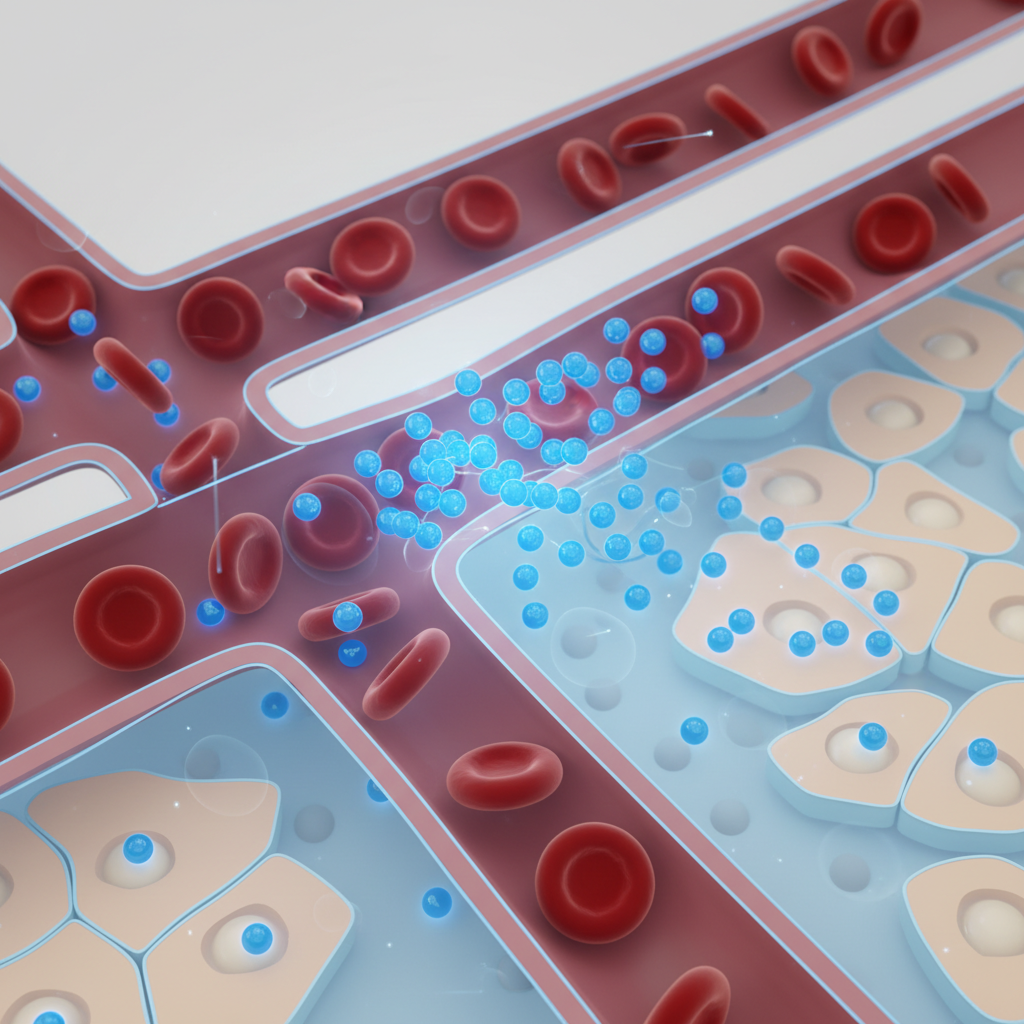
So what actually moves oxygen from your blood into a cell? CO2. When the CO2 around a tissue goes up, hemoglobin loosens its grip on oxygen. That's the Bohr Effect. It's how your body has moved oxygen every second of your life. AEIR raises CO2 through the skin. Oxygen then goes where you need it — muscle, joint, or skin.
Hyperbaric pressurizes the supply. We improve the delivery.
— Ross Schilling, DC
Read more from Ross →The Bohr Effect — how CO2 moves oxygen from blood into tissue
Supply is not delivery.
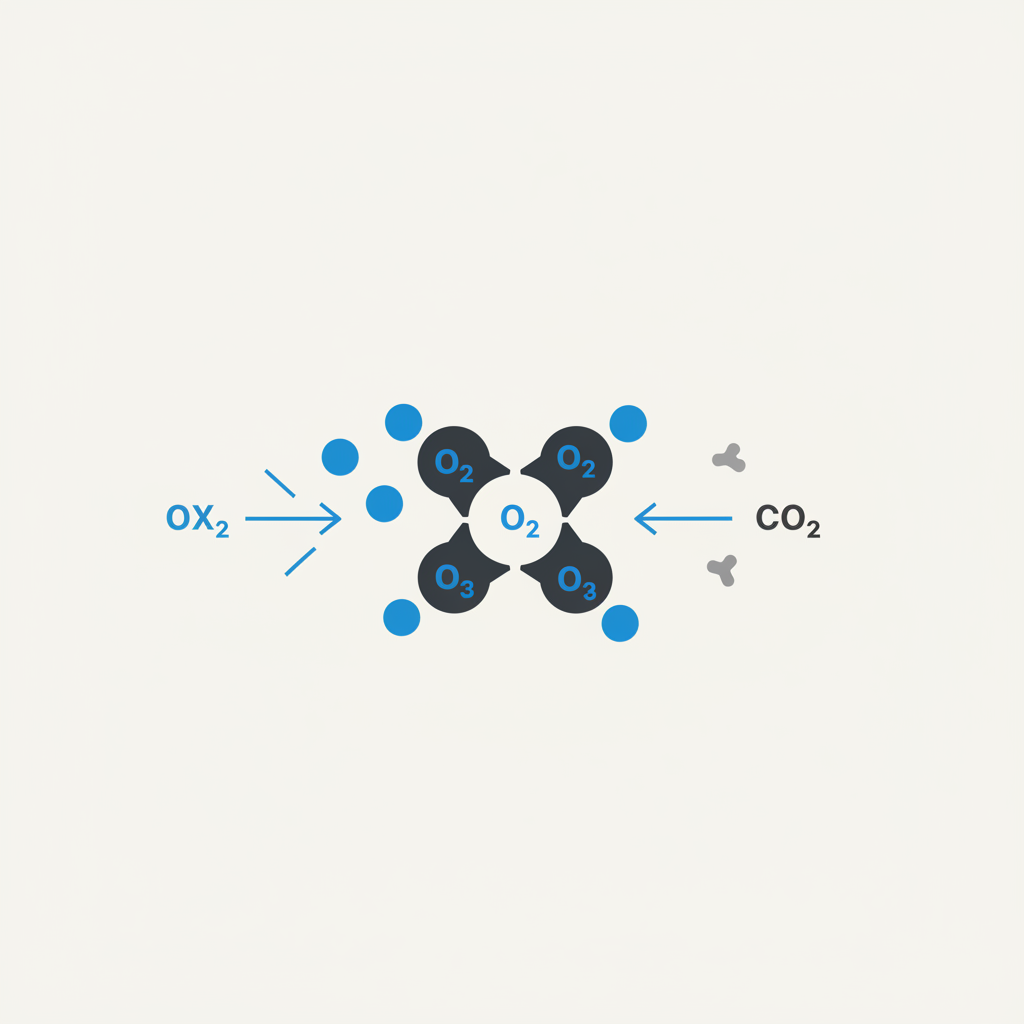
Panel 1 — Supply
Oxygen enters your blood through the lungs. By the time the blood leaves, it's already 97% full. Adding more with a pressure chamber barely raises the number. The extra rides in the fluid part of your blood. Most of it gets exhaled.
Panel 2 — Delivery
A working muscle makes CO2. So does a healing joint. So does skin that's rebuilding itself. When blood meets that CO2, hemoglobin lets oxygen go. The cell uses it. This is the Bohr Effect — the move your body has made every second of your life. AEIR raises CO2 through your skin. The effect runs on demand, at the tissue you choose.
The Research
Four studies. One mechanism.
Every claim below traces to a peer-reviewed paper. Two human studies. Two animal studies. We label which is which. Full PDFs on request.
Nybo & Rasmussen, 2007 · human study
CO2 isn't waste. It's the signal.
In humans during hard exercise, when CO2 drops, blood vessels tighten. Oxygen then fails to reach the brain — even when blood-oxygen numbers look normal. This is why supply is not delivery.
"Inadequate Cerebral Oxygen Delivery and Central Fatigue during Strenuous Exercise." Exercise and Sport Sciences Reviews, 2007.
Sakai et al. · human study
Measurable in one session.
Patients with circulation risk factors got one dry CO2 session. Thermal imaging showed blood flow to the limbs went up. Direct evidence — in humans — for the mechanism AEIR uses.
"The Effect of Dry Carbon Dioxide Bathing on Peripheral Blood Circulation Measured by Thermal Imaging among Patients with Risk Factors of PAD." International Journal of Environmental Research and Public Health.
Animal study (rat)
Faster repair at the tissue level.
In rats, muscle injuries healed faster when CO2 was applied through the skin. Measured in tissue — not just in how it felt. Human trials on this specific outcome are still ahead.
"Transcutaneous carbon dioxide application accelerates muscle injury repair in rat models." Laboratory Investigation.
Diabetic foot ulcer trial · human study
Works where delivery has already failed.
Patients with diabetic foot ulcers got CO2 through the skin. The small vessels that carry oxygen into tissue worked better. That's the hardest population to help. If delivery returns there, the mechanism is real.
"Transcutaneous application of gaseous CO2 for improvement of the microvascular function in patients with diabetic foot ulcers."
AEIR vs. Hyperbaric Oxygen Therapy.
The same goal — better tissue oxygenation. Two different mechanisms. Very different ownership models.
| Dimension | AEIR CO2 Therapy | Hyperbaric Oxygen Therapy |
|---|---|---|
| Mechanism | Bohr Effect — releases oxygen from hemoglobin into tissue | Pressurized oxygen — dissolves small additional O2 in plasma |
| Where the action is | At the tissue, where cells need it | In the bloodstream, before delivery |
| Session time | 20–30 minutes | 60–120 minutes |
| Tissue delivery | Directly improves oxygen release into target tissue | Relies on Bohr Effect at tissue level for actual delivery |
| Cost | $99 paste entry / $2,799 full system | $9,000–$23,000+ home chamber, or $200–$400 per clinic session |
| Comfort | Room temperature. No pressure change. Phone in hand. | Sealed chamber. Pressure changes. Ear-popping common. |
| Multitask during session | Yes — read, call, watch a show | Limited — confined space |
| Skin benefit | Yes — CO2 opens the small vessels in your skin, which is what collagen production needs | No direct skin mechanism |
| Maintenance | Hydrogel refills + CO2 tank swap | Chamber service + specialist oversight |
Asset needed here
About the practitioner
Ross Schilling, DC — founder of AEIR.
Doctor of Chiropractic. Biology degree. For years Ross has worked with professional athletes across the NHL, NFL, and Ironman circuits. He watched who recovered fastest. It was always the patients whose oxygen actually reached tissue. In his clinic, that shows up as warmth — a flush at the joint, a muscle that unclenches, sleep that comes back. That pattern led him to CO2. Not as waste. As the signal that moves oxygen from blood into cell. AEIR brings the clinic session home.
Read Ross's full story →Where hyperbaric belongs.
Hyperbaric therapy has a real clinical place. I recommend it myself for the right cases.
-
Decompression sickness.
The mechanism hyperbaric was built for — forcing nitrogen out of tissue — is a clear clinical win. AEIR is not a substitute here.
-
Acute burn care and select wound cases.
When pressurized oxygen is part of an acute-care plan under a physician, it's the right tool.
-
Severe carbon monoxide exposure.
Emergency medicine, not recovery medicine.
What we challenge is the recovery and performance use case. That's why most people look at a home hyperbaric chamber in the first place. For that job, the mechanism that matters is the Bohr Effect. And that's what AEIR is built for.
— Ross Schilling, DC
Two ways in. One mechanism.
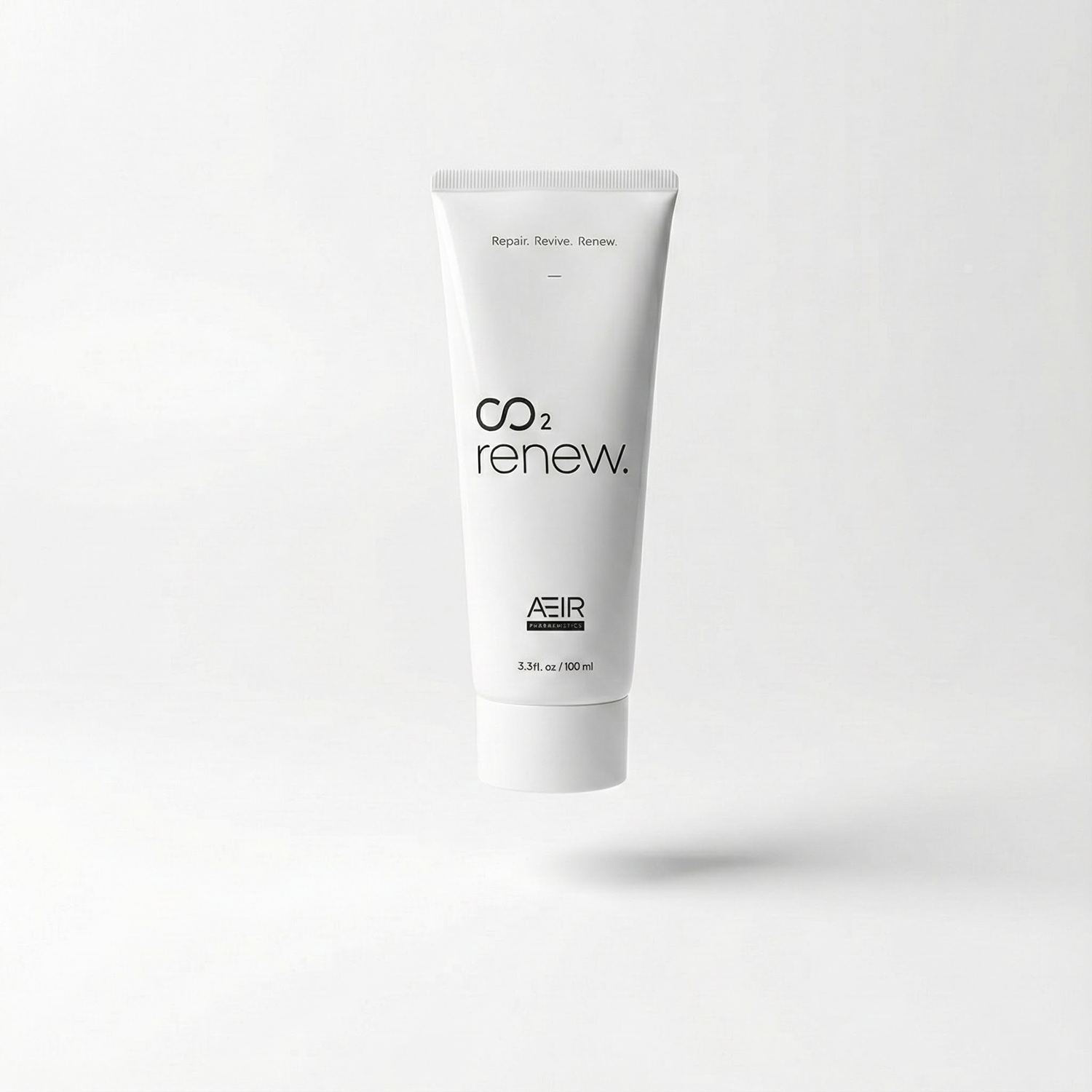
Paste
CO2 Renew 5-Pack — $99
Five travel tubes of the only patented at-home CO2 paste. Apply. Wait 20 minutes. Feel the warmth and flush at the tissue you choose — that's blood flow arriving. The lowest-risk way into AEIR. 30-day guarantee on unused product.
Try the paste — $99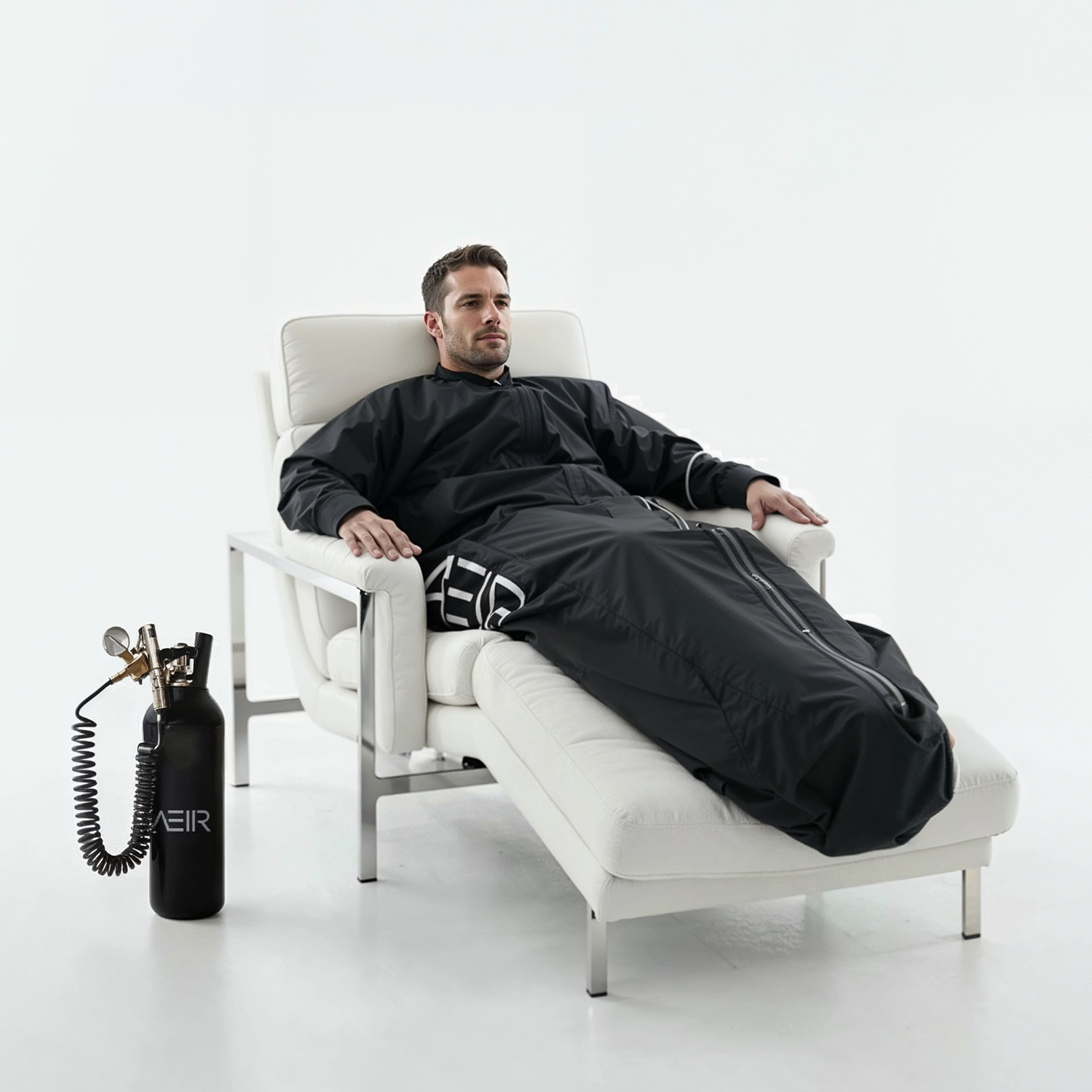
Full System
Full-Body Flex Kit — $2,799
Full-body CO2 therapy. Extra-large zipper. Arm access. 20–30 minutes a session, every day if you want. The same session Ross runs in his clinic, at home. Affirm financing around $225/mo. 30-day guarantee on unused product.
Explore the Flex KitStill weighing it?
Book a 20-minute call with our clinical team. Bring your recovery context. Bring your hyperbaric questions. We'll walk through the physiology with you and point you to the right starting place — paste or suit.