
NHL · Hockey
Between periods. Between games. Between seasons.
CO2 therapy triggers the Bohr Effect — the mechanism your body already uses to drop oxygen into tight tissue. Faster turnaround. Less soreness. More ice time.
The paste goes in the bag for the road trip. The Flex Kit lives in the rink or at home. Together, they cover every recovery window an NHL schedule hands you.
30-Day Satisfaction Guarantee
Hero image — hockey athlete recovery context. No team/league logos.
Locker-room adoption
Built for the 82-game season
The sport doesn't wait for your body to catch up.
Hockey stacks recovery debt like no other sport.
Three games in four nights. Cross-continent flights. Forty-five-second shifts at VO2 max with collision energy on top. A groin that was 70% last Tuesday is asked to be 100% by Thursday warmup.
The math doesn't work unless your recovery window shrinks. Most players lose an inch of range, a fraction of a second, and a percentage of power across an 82-game season — and it all compounds by March. By playoffs, it's the players who recovered fastest who are still skating, not the ones who trained hardest in September.
CO2 therapy targets that specific math: how fast your tissue re-oxygenates, re-perfuses, and rebuilds between games.
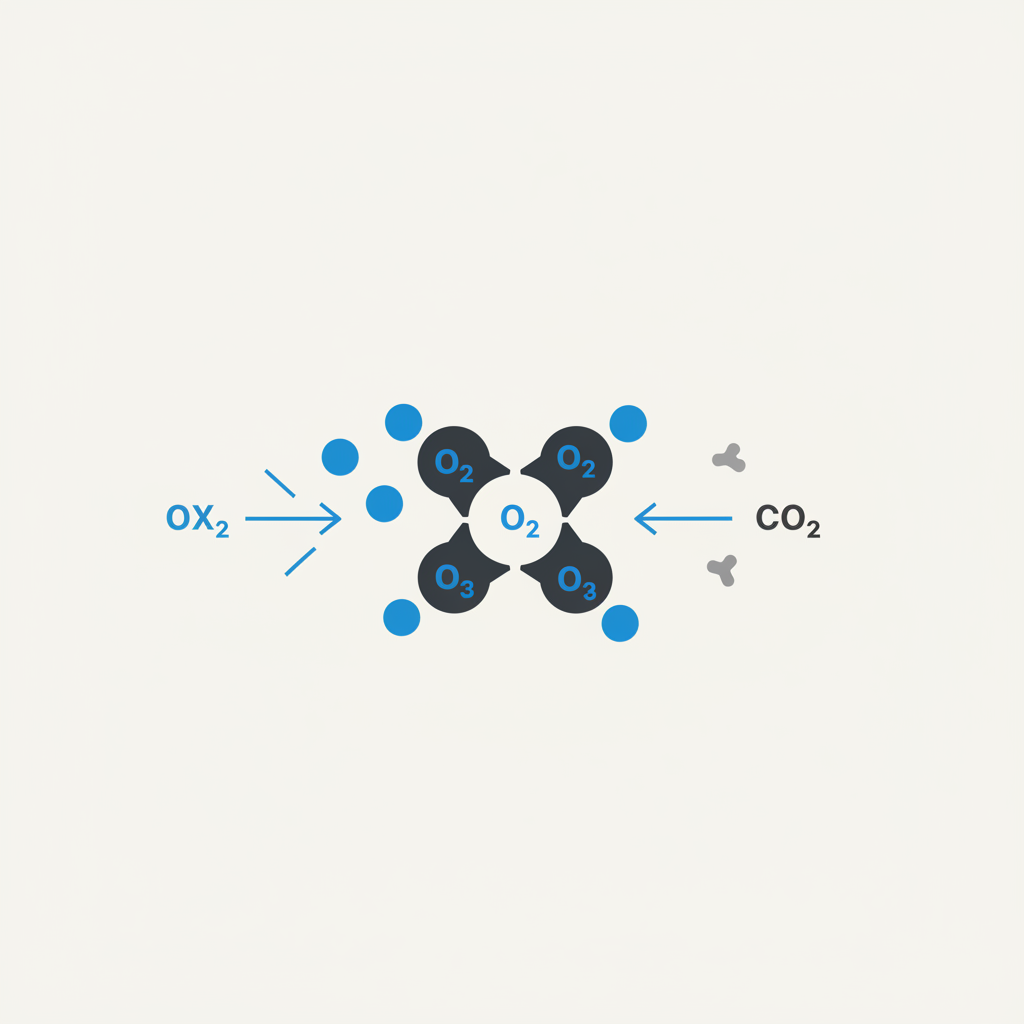
The science.
Your blood is already saturated. The question is whether it reaches your cells.
Oxygen alone doesn't heal tissue — CO2 is the signal that releases it from hemoglobin and drops it exactly where you need it. That's the Bohr Effect. It's the same mechanism your body uses during a shift to send oxygen to working muscle.
AEIR's transdermal CO2 therapy concentrates that signal externally — locally in the paste, systemically in the suit — so your cells get the oxygen they've already been carrying in your blood.
See how CO2 compares to hyperbaric →CO2 Renew Paste
What lives in your hockey bag.
Acute spots. Daily ritual. Pre-warmup freshness. $99 for five 10ml tubes.
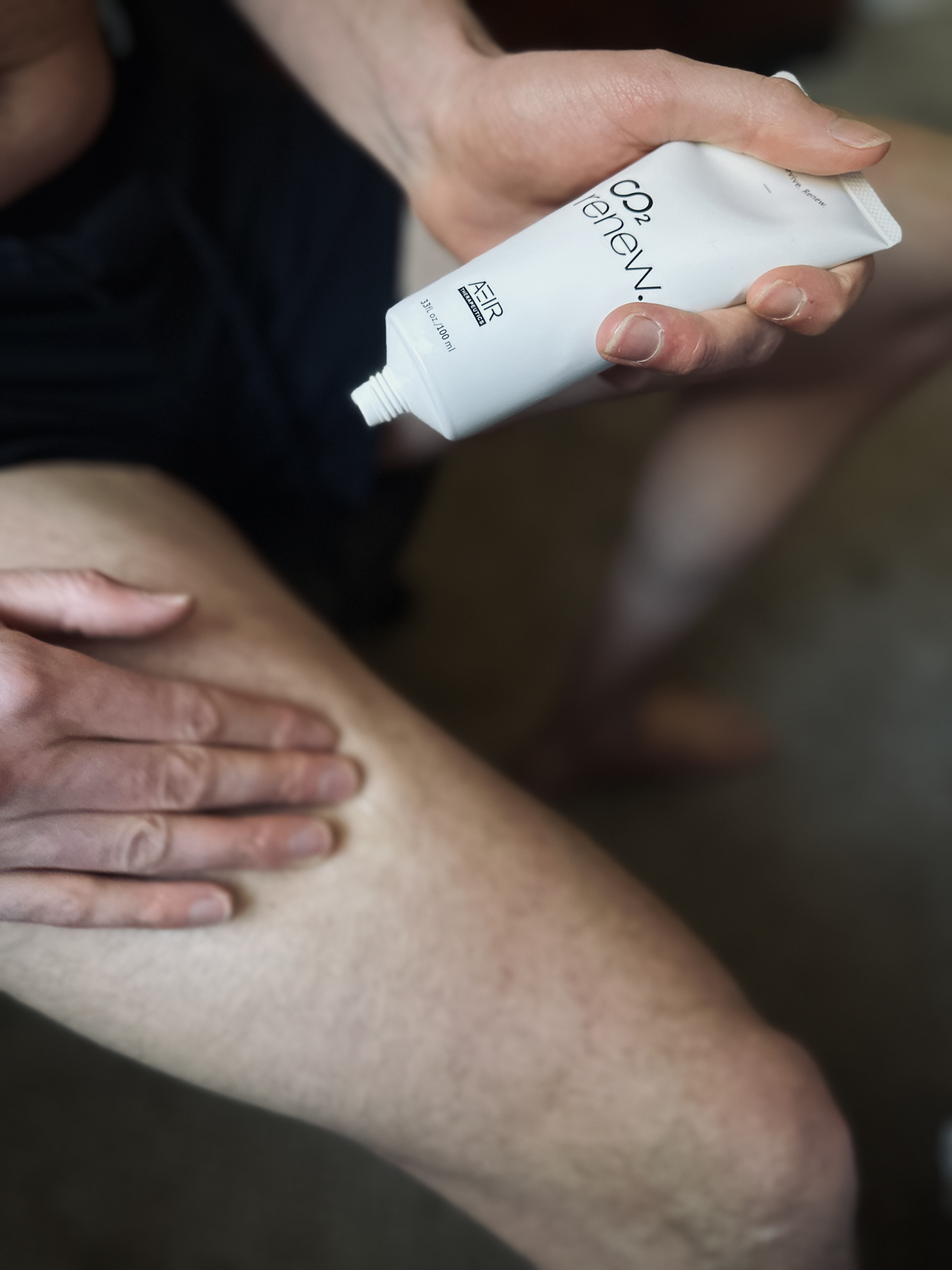
Acute relief, on-demand
Calf cramping after a back-to-back. Hip flexor tight from a red-eye. Apply the paste to the spot, cover with plastic wrap, leave for 20–30 minutes. Localized Bohr Effect, no equipment, nothing plugged in.
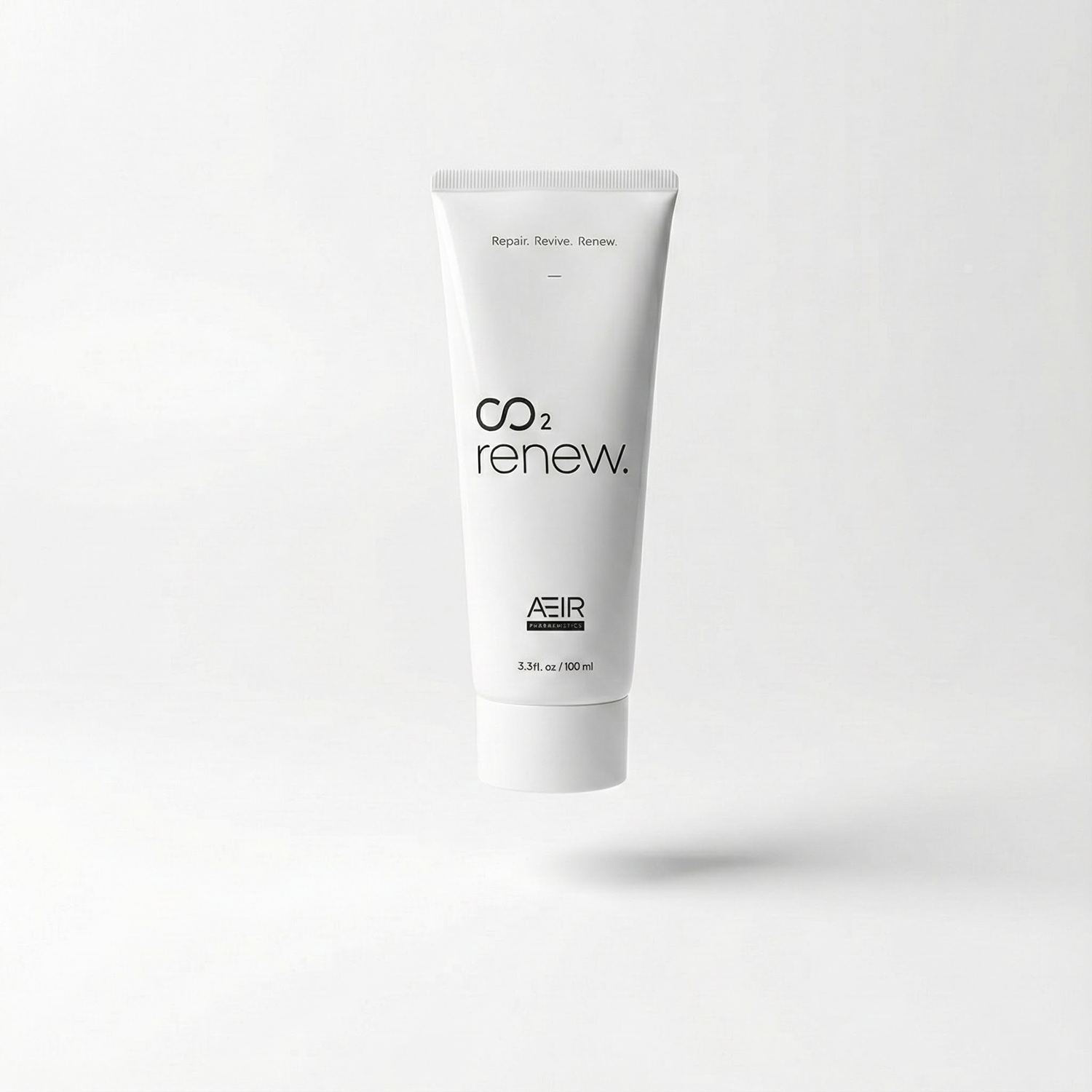
Daily ritual
Between practice and dinner. While you read before bed. Paste is low-friction enough to become automatic — and it's that consistency that compounds across an 82-game season.
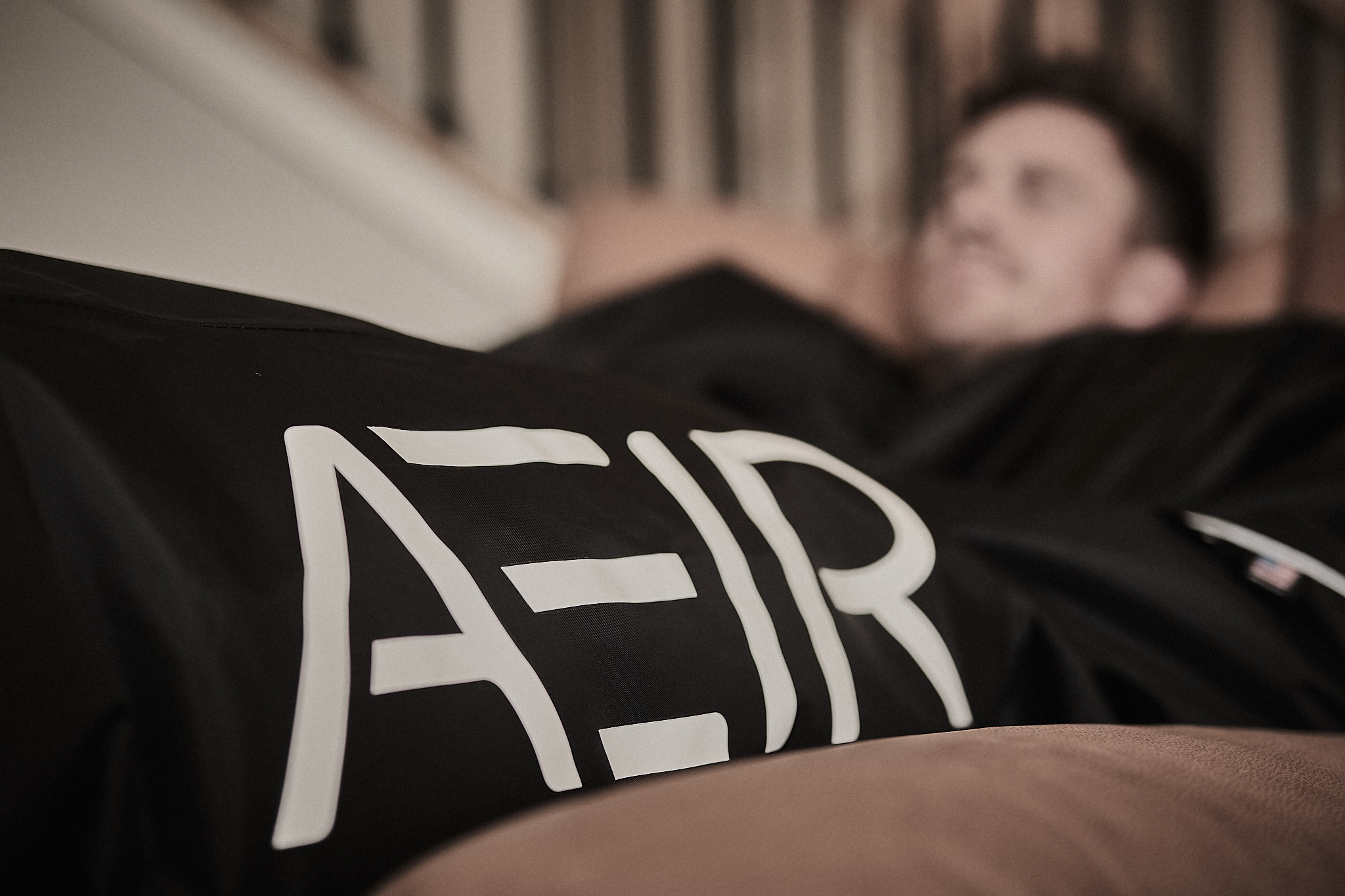
Pre-competition freshness
Apply morning of a game day to the areas you know get tight. Vasodilation, improved circulation, tissue that feels skated-in before warmup. No stimulants, no interference with testing.
The AEIR Full-Body Flex Kit
The locker-room standard.
Systemic recovery in 30 minutes. The full kit is $2,799 with the versatile extra-large zipper, arm access, and adjustable bottom.
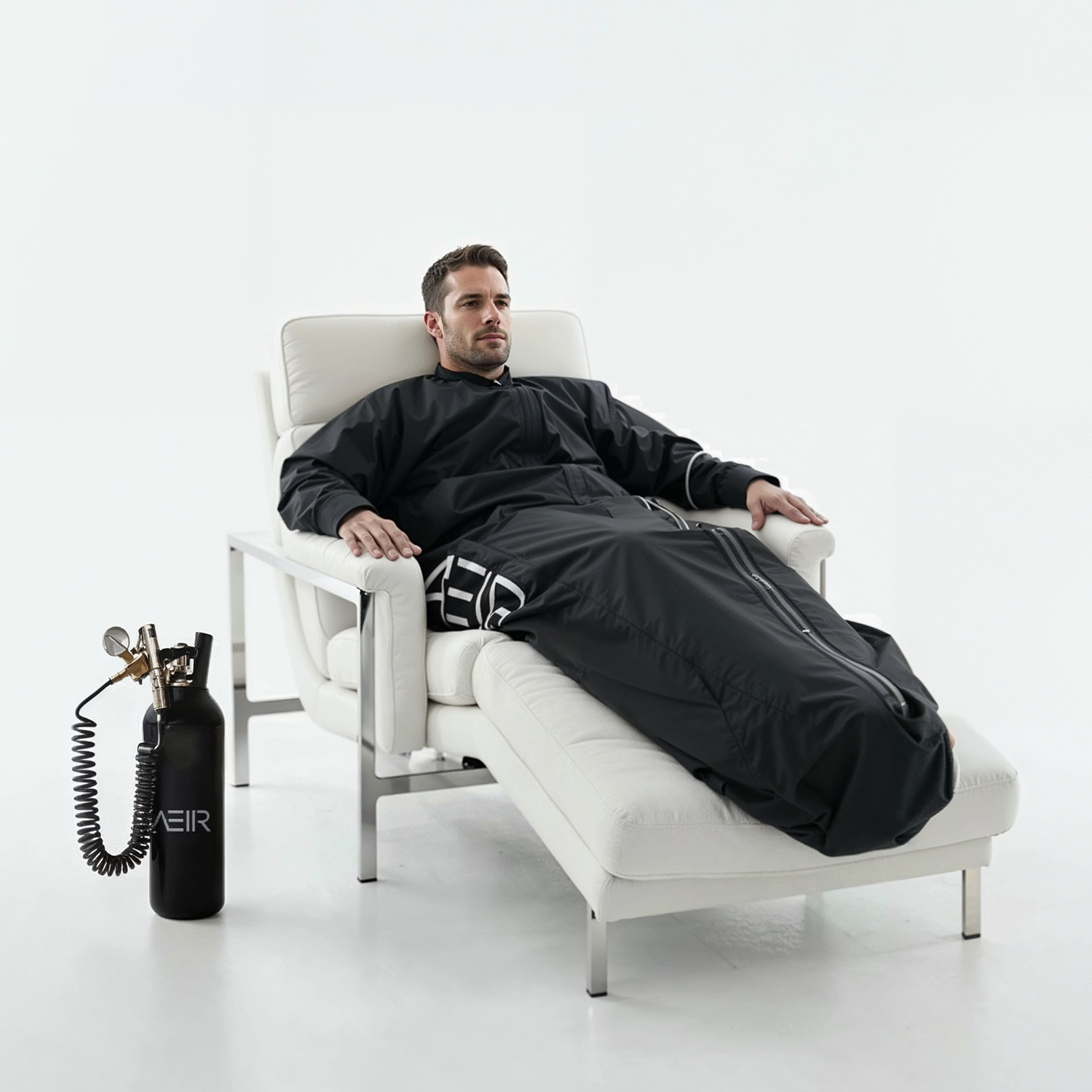
Systemic, not just spot-treatment
Where paste targets a hot spot, the suit surrounds shoulders to toes. Every tissue bed gets CO2 exposure at the same time — vasodilation and Bohr-Effect-driven oxygen delivery, head to foot.
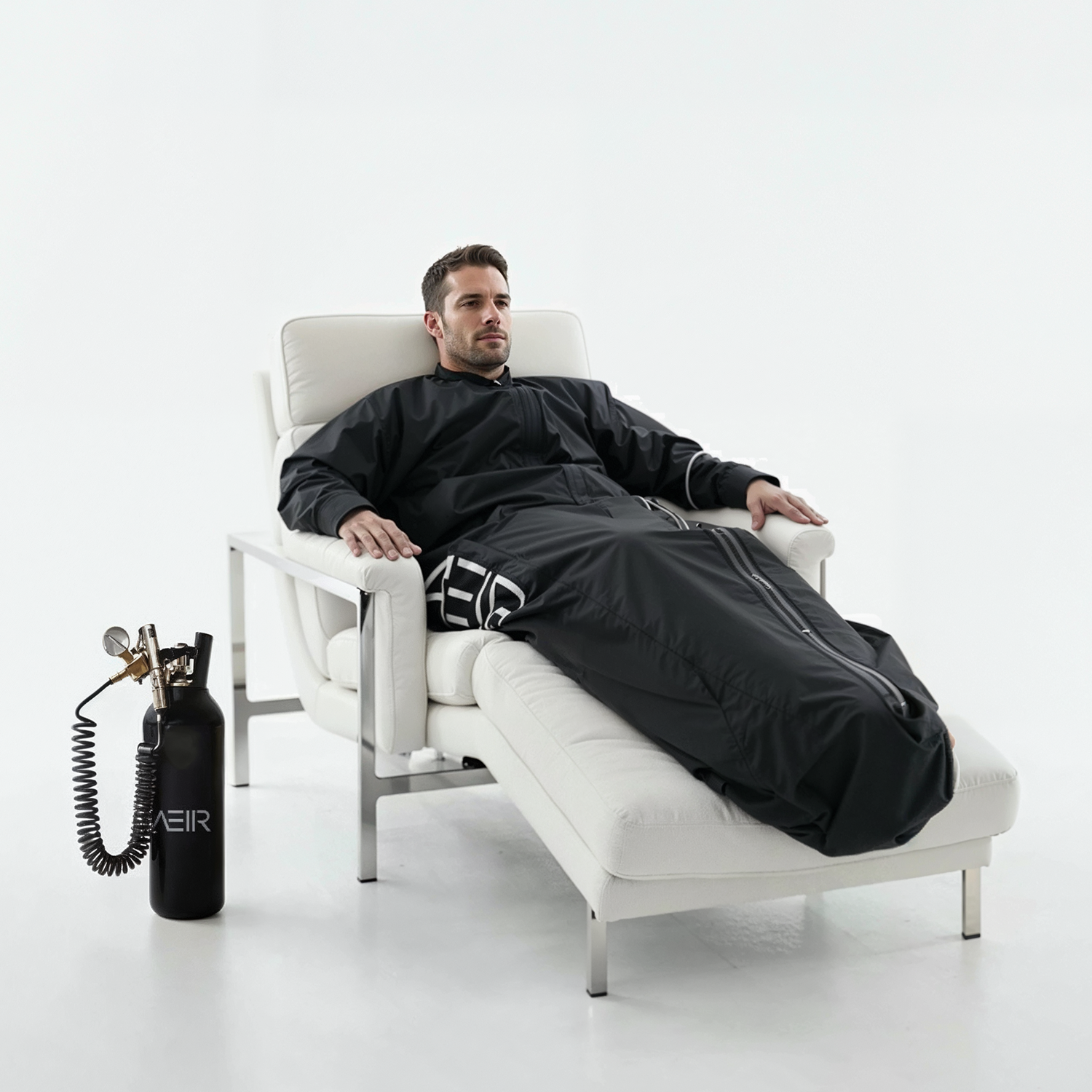
30-minute passive session
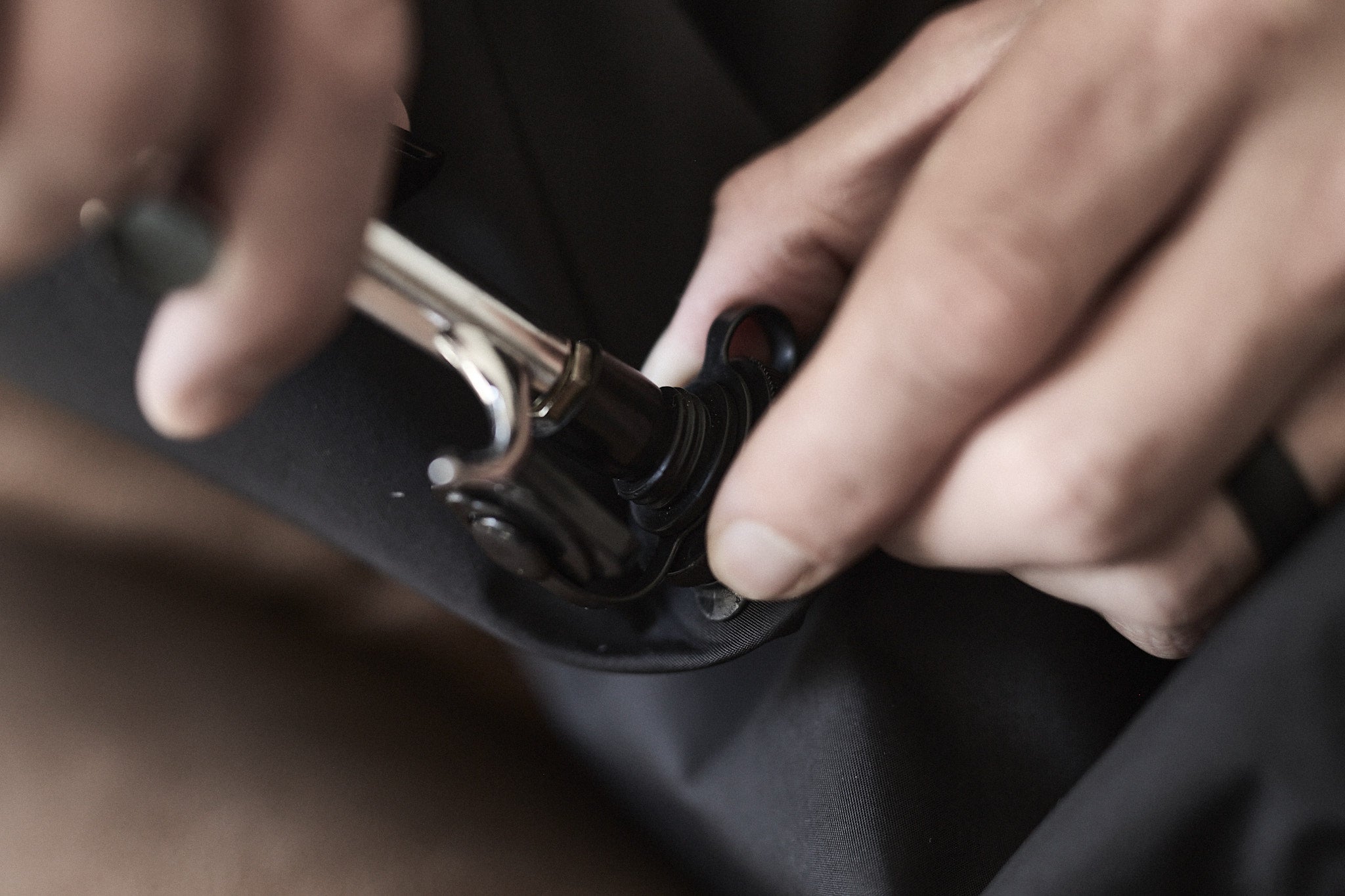
Zip in. Vacuum out the air. Let the hydrogel activate the CO2. Watch film, talk to the trainer, read your book. No stress position, no effort. Professional-grade recovery while you sit still.
Locker-room adoption
Teams integrating CO2 therapy post-game cover multiple players on multiple suits across one recovery window. Same mechanism the paste uses — amplified, systemic, and standardized across the roster.
Athlete feature — Nikolaj Ehlers
From ankle fracture to full return — with CO2 therapy in the protocol.
Nikolaj Ehlers' ankle fracture was the kind of injury that reshapes a season. For a winger whose game is built on edge work and acceleration, the question wasn't only when he'd be cleared — it was whether the tissue around the break would come back ready to take the first real hit.
CO2 therapy became part of how he rebuilt. Transdermal CO2 increases local perfusion, accelerates microvascular function in compromised tissue, and — as peer-reviewed work on transcutaneous CO2 application in fracture models shows — facilitates bone repair when dosage and duration are calibrated. Alongside the rest of the medical staff's protocol, CO2 therapy helped compress the window between cleared-to-skate and playing-at-speed.
He returned to the ice faster than the calendar predicted. That's the story AEIR cares about: a measurable shortening of a recovery window in one of the most demanding return-to-play scenarios in hockey.
Read the science of CO2 in fracture repair →"Recovery is the difference between coming back and coming back the same."
NHL player in-suit use — no team logos in composition.
Locker-room adoption
CO2 therapy is part of the recovery protocol in locker rooms across the league.
Winnipeg Jets · Colorado Avalanche · Detroit Red Wings · Anaheim Ducks
Professional quote pairings available for press and retail contexts with player clearance. Nathan MacKinnon, Gabriel Landeskog, Brock Nelson, Nikolaj Ehlers, James van Riemsdyk, Adam Lowry, Jonathan Toews, and Tom Wilson are among the professionals who have worked with AEIR.
"I watch the best athletes in the world push their bodies past reasonable limits. My job is to give them a tool that works at the cellular level while they sleep."
Paste as the daily companion. Suit as the elite anchor.
The hockey recovery protocol.
Every phase has a touchpoint.
Between periods
Paste on known hot spots
Groin, hip flexors, lower back. Quick application, covered, worn through the intermission. Vasodilation before the next shift.
Post-game
Flex Kit, 30 minutes
Zip in as soon as you shower and eat. Systemic Bohr Effect flush before sleep. Your HRV recovers while you rest.
Road trip
Paste travels
Five 10ml tubes in the dopp kit. Apply in the hotel, wrap, twenty minutes. One tube handles a localized application.
Between games
Stack them
Paste at the hotel. Suit at the home rink. The mechanism is the same; the coverage is the difference.
First 48 hours
Paste, targeted and often
Apply to the impacted area every 12–24 hours as tolerated. Increased microvascular function flushes metabolites; oxygen delivery supports tissue repair.
Day 3–7
Add systemic
Integrate 30-minute Flex Kit sessions three times in the first week. Systemic perfusion supports full kinetic chain, not only the primary site.
Return-to-play ramp
Pre- and post-skate
Paste pre-skate on the injured zone. Suit post-skate. Compress the turnaround without overloading the tissue.
Baseline back
Maintenance mode
One to two suit sessions per week. Paste daily on known vulnerabilities. Stay ahead of re-injury.
Cleared for therapy
Work with your medical team
Once your surgeon clears therapy, CO2 application supports the microvascular environment tissue repair actually requires. Research in transcutaneous CO2 and fracture models shows accelerated bone healing with calibrated dosage.
Weeks 2–6
Paste, daily
Targeted on the operative area per your PT's direction. Small, compounding improvements in local perfusion.
Weeks 6–12
Systemic support
Full-body Flex Kit sessions 3× weekly. Avoid compensation-injury patterns by keeping the rest of your kinetic chain recovered.
Return-to-play
Back to game pace
Paste on the operative site pre-skate. Suit after skating at game intensity. Keep the window short.
On the plane
Hydrate first
CO2 therapy works best when tissue is hydrated. Water intake is non-negotiable.
Hotel arrival
Paste, legs and back
Twenty-minute application as you unpack. Flight stiffness handled before it becomes tomorrow's problem.
Morning of
Paste pre-warmup
Known tight zones. Same mechanism, already-warm tissue. Enters warmup further ahead.
Return home
Suit within 24 hours
Full-body reset after a three-game road trip. Clear the travel load before the next week begins.
The Research
The research behind the protocol.
Peer-reviewed. Mechanism-first. Full PDFs in our research library.
Peer-reviewed
Transcutaneous CO2 accelerates muscle injury repair
In controlled animal models, muscle injuries repaired faster with transcutaneous CO2 application — measurable in tissue, not just how it feels.
Transcutaneous carbon dioxide application accelerates muscle injury repair in rat models.
Peer-reviewed
Transcutaneous CO2 supports fracture repair
Bone healing accelerates with transcutaneous CO2. Dosage and duration matter — which is why AEIR's session length is calibrated.
Effects of the duration of transcutaneous CO2 application on the facilitatory effect in rat fracture repair.
Peer-reviewed
Dry CO2 bathing improves peripheral circulation
Thermal imaging documents measurable peripheral circulation improvement after a single dry CO2 session.
Sakai et al. — The Effect of Dry Carbon Dioxide Bathing on Peripheral Blood Circulation.
Peer-reviewed
CO2 drives endurance capacity
Elevated CO2 improved endurance performance at the cellular level — the same mechanism that ends a shift is the one that powers through it.
Increase in carbon dioxide accelerates the performance of endurance exercise in rats.
Hockey FAQ.
Two entry points. Same mechanism.
Start where the schedule lets you.

Entry Point
CO2 Renew 5-Pack — $99
Five 10ml tubes. Road trips, between games, daily ritual. The paste that compounds across a season.
$99 under $20 per treatment
Shop the 5-Pack
Flagship Experience
AEIR Full-Body Flex Kit — $2,799
The locker-room standard. Thirty minutes, systemic recovery, no equipment to plug in. Kit includes the extra-large diagonal zipper suit, filling kit, and hydrogel.
$2,799 complete system
Explore the Flex KitThe hockey recovery letter.
Protocol updates, new studies, and in-season case notes from the AEIR clinical team. One message a week. No filler.
By subscribing, you agree to our privacy policy.