
Triathlon · Endurance
Three sports. One body. One recovery system.
CO2 therapy triggers the Bohr Effect — dropping oxygen into the shoulder that just swam, the quad that just climbed, the Achilles that just ran. The paste goes with the training week. The Flex Kit handles the load stacks that break most recovery tools.
The discipline changes. The damage layers. The mechanism that delivers oxygen into tissue doesn't care — it just works.
30-Day Satisfaction Guarantee
Jason Pohl on the bike — Iron Man Texas 2026 training. No event logos.
Iron Man Texas 2026
Three disciplines, one system
Three disciplines don't share recovery — they compound it.
The swim, the bike, and the run stress different tissue in the same week — and the body pays for all three.
A swim lights up the shoulder girdle, the lats, the rotator. A bike stacks quad and glute load with cervical and lumbar tension from the aerobars. A run is eccentric tissue damage through Achilles, calf, and hip flexor. Stack all three across an 18–20 hour week, and the recovery math isn't additive — it's layered.
Most triathletes hit the same wall at some point in a training block: one zone becomes the limiter. An Achilles that was 90% last Wednesday is 60% this Saturday. A shoulder that was fine in the pool starts reporting on the bike. The body decides what the block looks like — not the plan on the spreadsheet.
CO2 therapy works directly on the recovery physiology that determines whether those layered zones repair between sessions: microvascular function, tissue oxygenation, and the body's own repair signal — the Bohr Effect.
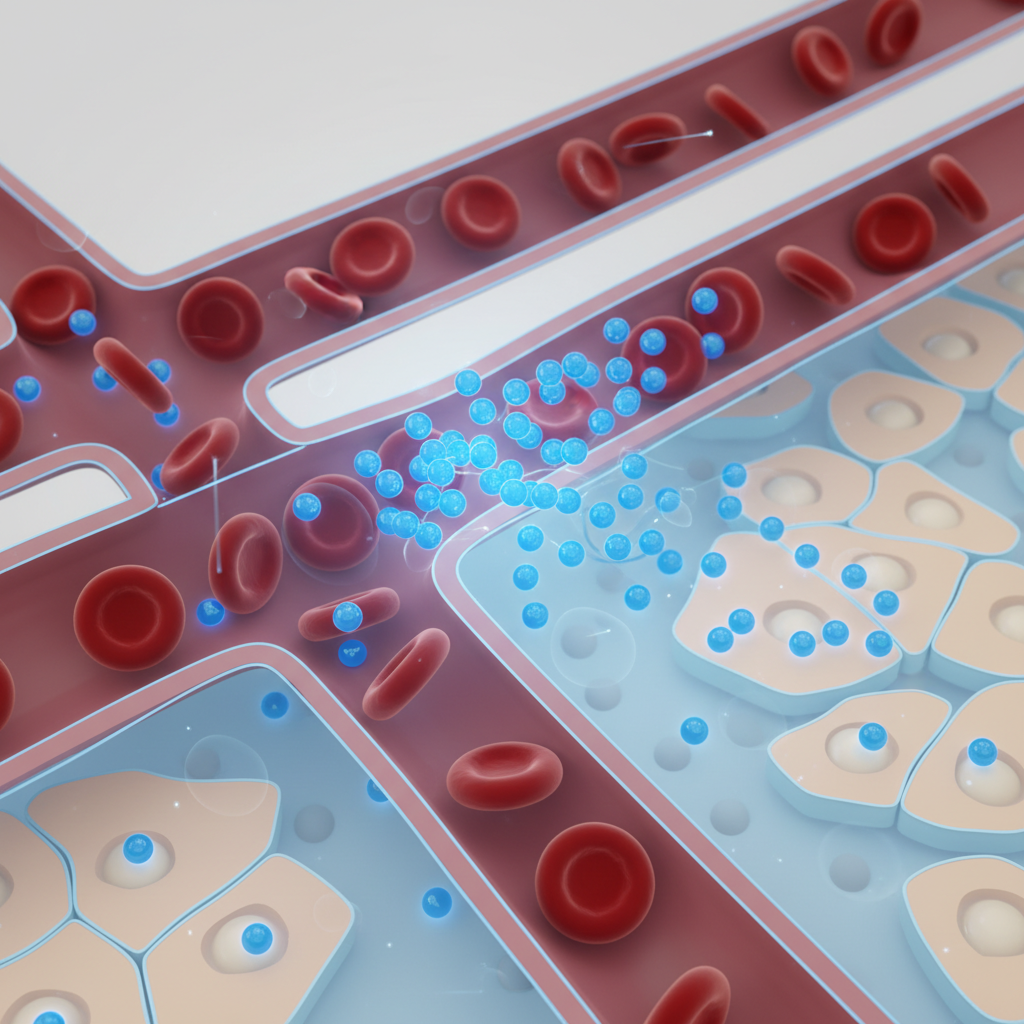
The science.
Your blood is already saturated with oxygen. CO2 is what tells it to land in tissue.
The Bohr Effect is the mechanism your body uses during a race to send oxygen from blood to working muscle: concentrated CO2 causes hemoglobin to release oxygen into the tissue beneath it. After the session, damaged tissue still needs delivery — but the metabolic signal has faded.
AEIR's transdermal CO2 therapy externalizes that signal. The paste is local — shoulder, Achilles, quad. The Flex Kit is systemic — shoulders to toes, 30 minutes. Same mechanism, different coverage. The same cells that oxygenate during a race get oxygenated during recovery.
See how CO2 compares to hyperbaric →CO2 Renew Paste
The nightly tool, by discipline.
Each 10ml tube handles one zone. $99 for the 5-Pack; a 100ml subscription is the long-term answer for a full training block.
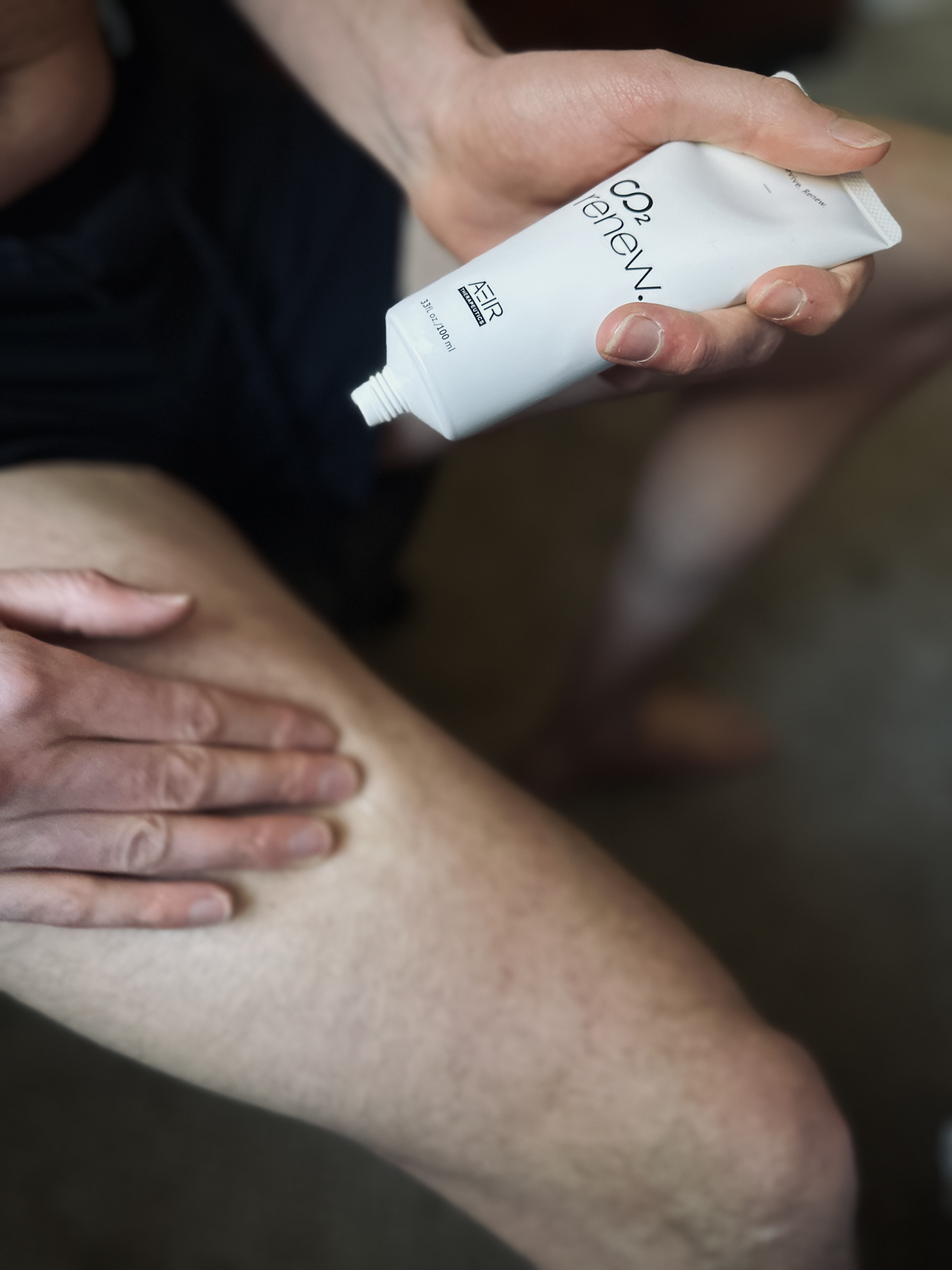
Swim — shoulder, lats, rotator
Shoulder fatigue after a heavy pool week. Rotator stiffness from volume catching up. Paste applied to the posterior shoulder, under plastic wrap, 20–30 minutes. Vasodilation where the stroke lands.
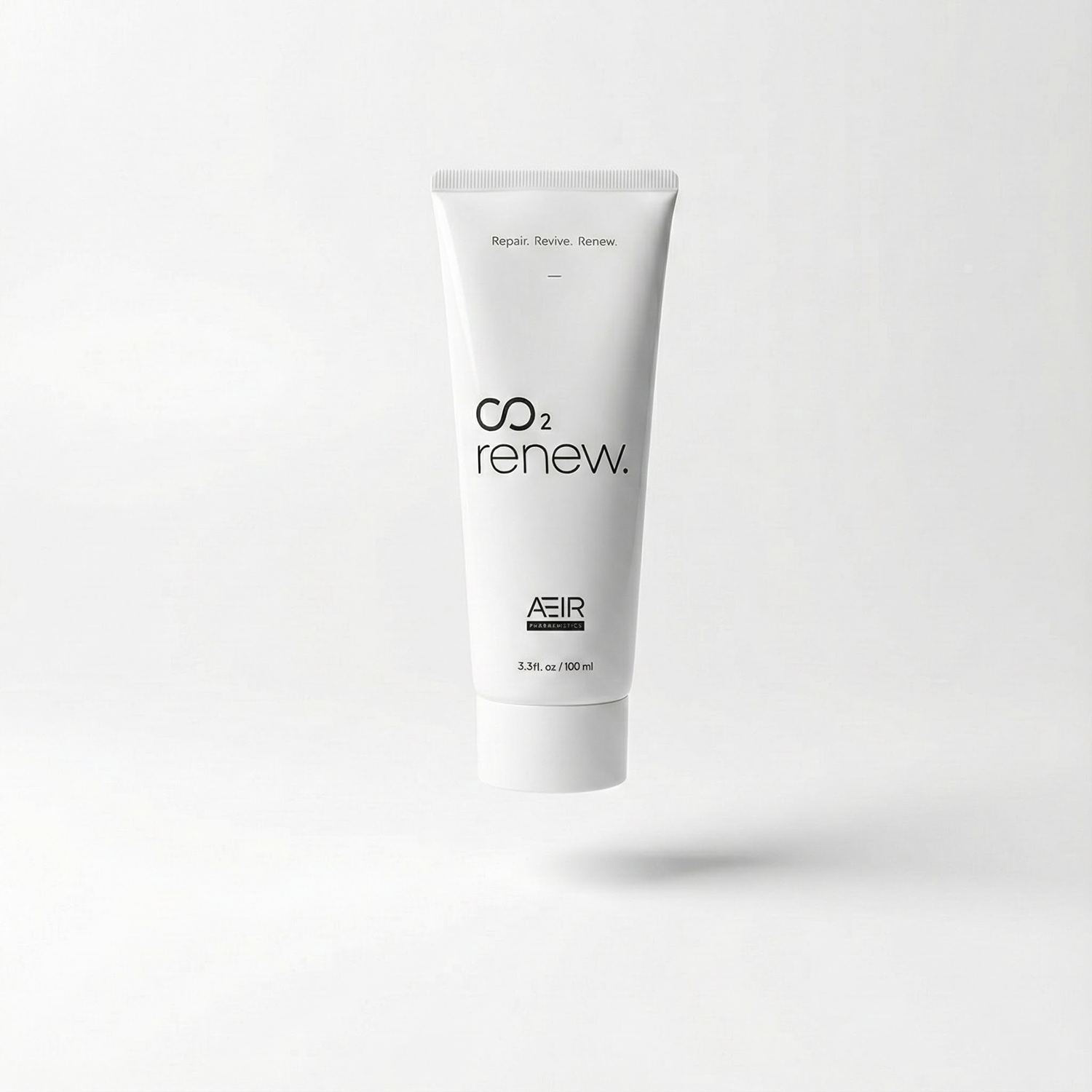
Bike — quad, glute, cervical, low back
A long ride is a quad and glute event on top of hours in the aerobars. Paste on the quad and glute medius the same night; cervical and low back on alternating nights. Three tubes can cover a week.
Run — Achilles, calf, hip flexor, plantar
The discipline that breaks the most triathletes. Paste on Achilles and calf nightly through any run-heavy block. Early intervention is the whole game — a flare caught tonight is a week saved next week.
The AEIR Full-Body Flex Kit
The systemic tool for stacked load.
30 minutes. Shoulders to toes. The recovery tool built for the week that hits every tissue bed. $2,799 for the extra-large-zipper suit, filling kit, and hydrogel.
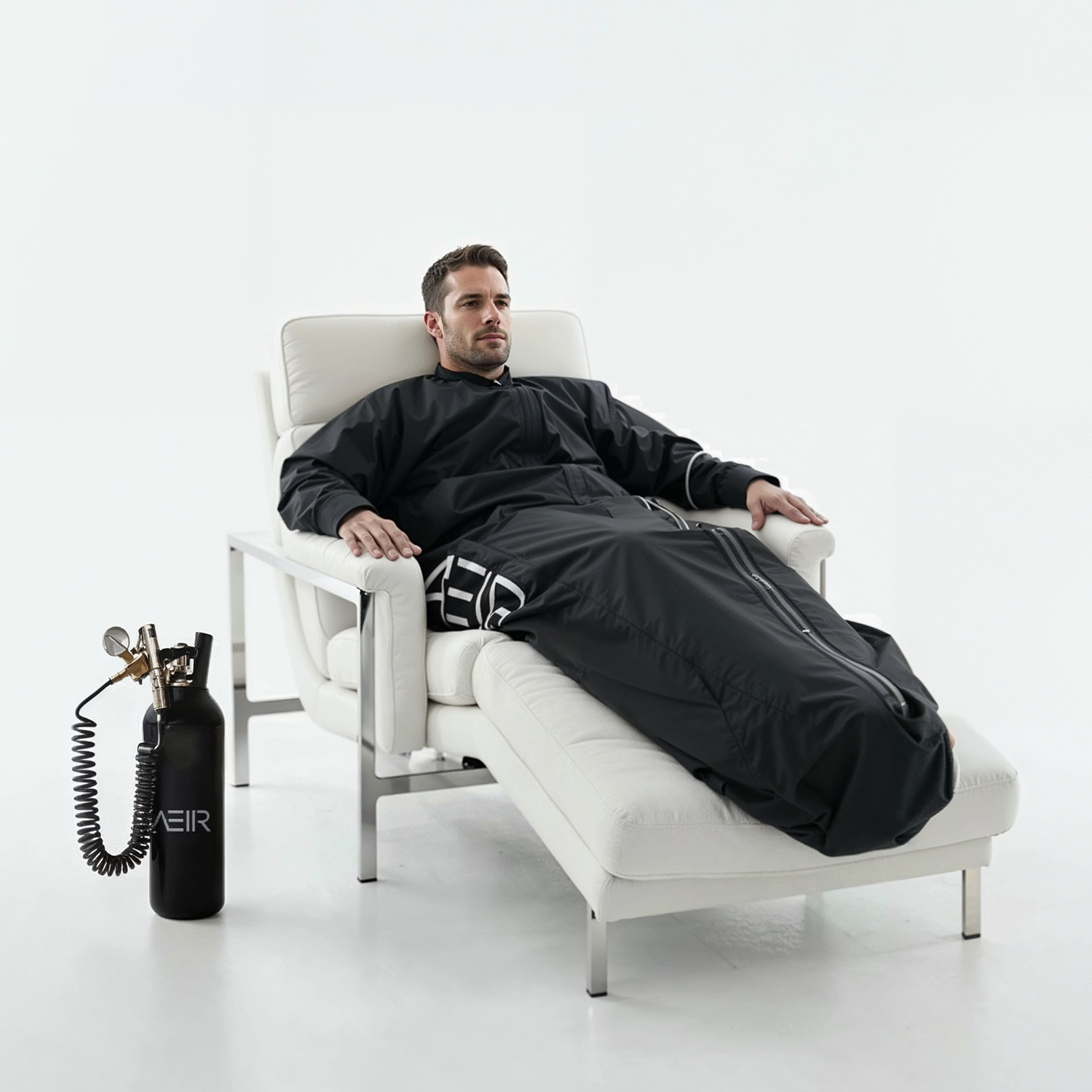
Every tissue, one session
Triathlon is a systemic damage problem, not a single-zone problem. The suit surrounds shoulders to toes in a calibrated CO2 environment. Every tissue bed gets vasodilation and Bohr-Effect delivery simultaneously.
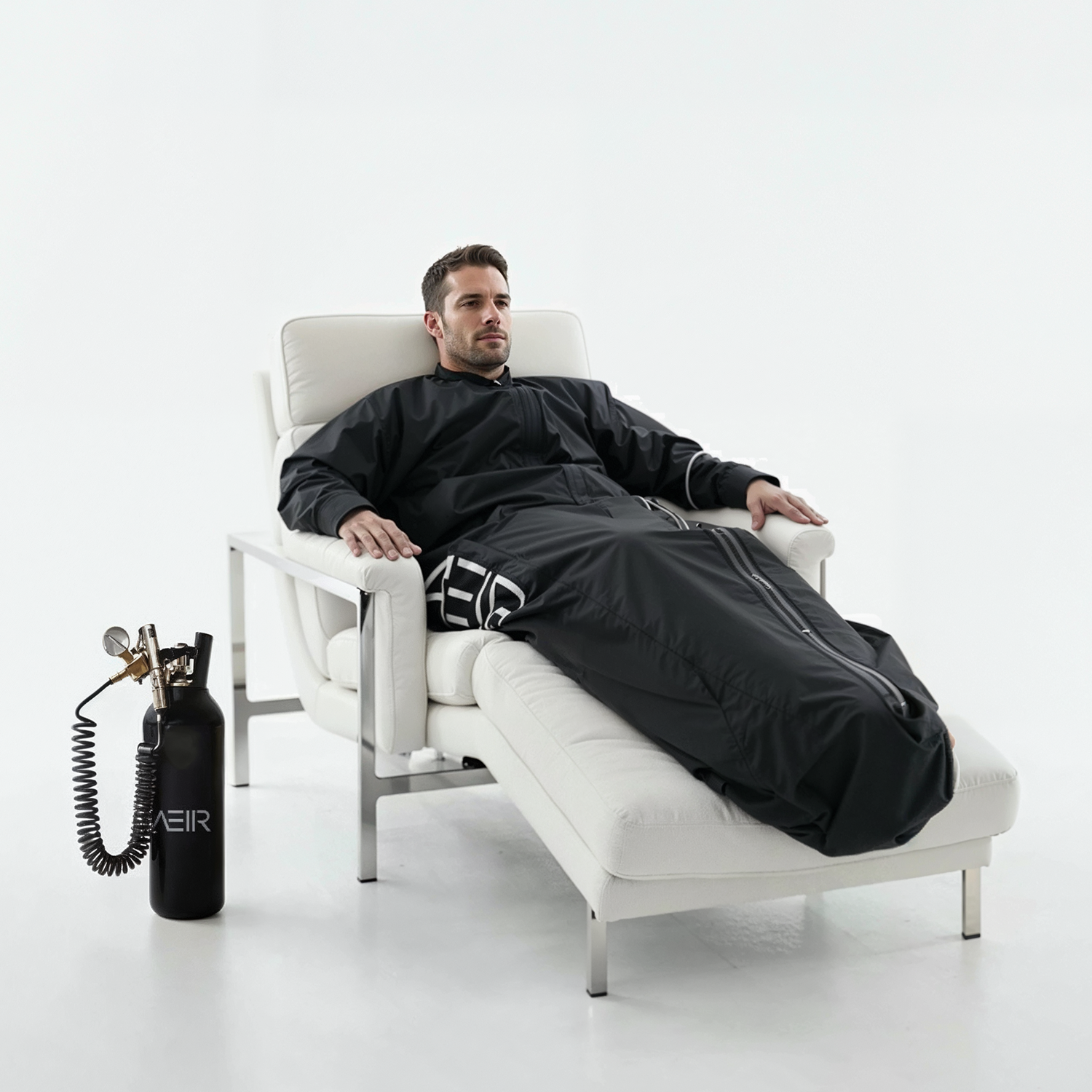
30 minutes of sit-still
Zip in. Vacuum the air. Activate the hydrogel. Watch the race replay, eat, rest. Thirty minutes of sit-still recovery — no strain, no effort. Passive systemic tissue support.
Multiple triathletes in Flex Kits during Iron Man training block.
Built into the Iron Man house
At Iron Man Texas 2026, triathletes in training ran Flex Kit sessions at the Iron Man house. Full-body suits before and after race simulation days — the volume-management tool the protocol was designed for.
Athlete feature — Jason Pohl · Iron Man Texas 2026.
The Achilles told him he couldn't. The protocol told him he could.
Jason Pohl's Achilles history is the kind that stops most triathletes from attempting a full Iron Man — let alone returning to competitive shape for one. Years of tendon issues, compounding load, and the math of 26.2 miles at the back of a 140.6-mile day had kept him below the level of performance he knew his body could reach.
The rebuild was deliberate: a training block designed around Achilles load tolerance, paired with a recovery protocol that treated the Achilles every day. Nightly CO2 Renew paste on the tendon. Full-body Flex Kit sessions 2–3× weekly to handle the systemic volume. The peer-reviewed work on transcutaneous CO2 and microvascular function informs exactly this kind of rebuild — tissue whose oxygen-delivery infrastructure is compromised responds to the right signal.
He arrived at Iron Man Texas 2026 in competitive shape. The Achilles held. That's the story AEIR cares about: not a single dramatic moment, but a rebuild that worked at the level tissue repair actually happens.
Explore the Flex Kit Jason uses →"The paste and the suit became part of the training plan. Recovery wasn't the thing I did after training — it was how training was possible."
Jason Pohl in the AEIR Full-Body Flex Kit. No event logos.
Jason Pohl nutrition prep — recovery as part of a full training plan.
Where AEIR meets the endurance world.
Built alongside the teams whose bodies decide what "enough recovery" actually means.
At the 2026 Iron Man Texas event, AEIR hosted triathletes for training and recovery integration across race week. The Precision Hydration team visited the house and experienced full-body Flex Kit sessions — the conversations about hydration, carb prep, and recovery integration shaped how the protocol is written today.
The event itself featured a near-world-record finish by Christian Blumenfeldt — the fastest Iron Man performance on record in the field that weekend. Blumenfeldt is cited here as event context only; AEIR has no endorsement relationship with him or any individual athlete outside its own roster.
This is the endurance community AEIR is embedded in — not as a sponsor, but as a protocol partner.
Paste as the nightly discipline. Suit as the systemic anchor.
The triathlon recovery protocol.
Every block has a touchpoint.
Nightly paste
Whatever reported loudest
Rotate zones across the week based on which discipline ran heaviest. Shoulder after swim days. Quad after bike days. Achilles and calf after run days. One tube, one zone, under wrap 20–30 minutes.
One suit per week
Long-session day
Post long ride or long run. 30-minute Flex Kit session. Systemic flush before the next block of the week.
Pre-habilitation
Known chronic zones
Achilles, rotator, cervical — whatever has been chronic for a season. Paste preventively 2–3 nights per week even when quiet.
Hydration base
Non-negotiable
CO2 therapy rewards hydrated tissue. Precision-level hydration is the base layer under every recovery tool on this page.
High-intensity day paste
Same-night application
After a hard interval set, a threshold ride, or a tempo run — paste that night on the most-loaded zone. Don't let intensity damage carry forward.
Long-session suit
Within 24 hours
Long rides and runs justify Flex Kit sessions inside 24 hours. Systemic recovery before the next session arrives.
Sleep / easy days
Recovery-stacking
Easy-day paste on whatever's still reporting. Sleep quality, HRV, and subjective readiness are your data — paste an extra zone if the data dips.
First flare
Intervene tonight
Achilles reporting? Rotator tight? Paste tonight, not next week. Triathletes who delay intervention pay for it across a block.
Week -2
Three suit sessions
Monday, Thursday, Sunday. Systemic recovery at the moment the body is finally catching up on weeks of accumulated damage.
Week -2 paste
Chronic zones daily
Every night on the zones you've managed through the block. Don't experiment, don't add — only sustain.
Week -1 suit
Two sessions
Monday and Thursday. Race week. No experiments. The systemic tissue reset has already worked by Monday.
Race -48 hours
Skip or simplify
Most athletes skip suit and paste 48 hours pre-race to keep race-morning sensations familiar. If a specific chronic zone benefits from paste, use 90 minutes before a shakeout, not race morning.
Race morning
Keep it familiar
If paste is part of the race-morning routine, only because you rehearsed it. Shoulder for swim start. Achilles for run leg. 90 minutes before start, remove 60 minutes out.
Post-finish window
Rehydrate first
Before any recovery modality — rehydrate and eat. CO2 therapy doesn't replace nutrition; it works with it.
Within 24 hours
Suit session
First Flex Kit session inside the 24-hour post-finish window. Full systemic reset. Your HRV recovers while you sit still.
48–72 hours
Paste the zone that reports
After a full-distance race, one zone will be loudest. Paste that zone nightly for 4–7 days. Suit every other day.
Post-race 10 days
High-frequency recovery
Suit every other day for the first 10 days. Daily paste on any chronic zone. Ultra and full-Iron Man recovery windows reward frequency.
Off-season rhythm
Suit 1–2× week
Through the off-season. Daily paste on chronic zones. Enter next block with tissue ready.
Strength reintroduction
Paste new zones
Off-season strength work lights up new zones — posterior chain, glute med, deep core. Paste those as they emerge.
Injury review
Pre-habilitate now
Whatever injured you in the last block gets pre-habilitation paste starting in the off-season. Don't rebuild to the same limit.
The Research
The research behind the protocol.
Peer-reviewed. Mechanism-first. Full PDFs in our research library.
Peer-reviewed
CO2 improves endurance performance at the cellular level
Elevated CO2 improved endurance performance at the cellular level. The same mechanism that ends a race is the one that powers through it.
Increase in carbon dioxide accelerates the performance of endurance exercise in rats.
Peer-reviewed
CO2 accelerates muscle injury repair
In controlled models, transcutaneous CO2 application accelerated muscle injury repair — measurable in tissue.
Transcutaneous carbon dioxide application accelerates muscle injury repair in rat models.
Peer-reviewed
CO2 improves microvascular function in compromised tissue
Transcutaneous CO2 improved microvascular function in patients whose tissue oxygen delivery was already failing — the exact physiology of a chronic Achilles.
Transcutaneous gaseous CO2 for microvascular function.
Peer-reviewed
Skeletal muscle function improves
Skeletal muscle function improved after transcutaneous CO2 exposure — the clinical foundation of AEIR's recovery and performance protocols.
The effect of transcutaneous application of CO2 on skeletal muscle.
Triathlon FAQ.
Two entry points. Same mechanism. Built for three disciplines.
Start where your block lets you.

Entry Point
CO2 Renew 5-Pack — $99
Five 10ml tubes. Shoulder, quad, Achilles, calf, hip flexor. The nightly habit that carries a training block.
$99 under $20 per treatment
Shop the 5-Pack
Flagship Experience
AEIR Full-Body Flex Kit — $2,799
The systemic recovery tool for three-discipline stress. Thirty minutes, shoulders to toes, passive.
$2,799 complete system
Explore the Flex KitThe block letter.
Protocol notes, new studies, and endurance-community case observations from the AEIR clinical team. One message a week. No filler.
By subscribing, you agree to our privacy policy.
"Triathletes are some of the most data-literate athletes I work with. They don't need to be convinced — they need to see the mechanism. Once they do, the protocol writes itself."