
Running · Rec → Ultra
Mileage is the work. Recovery is what lets you do it again tomorrow.
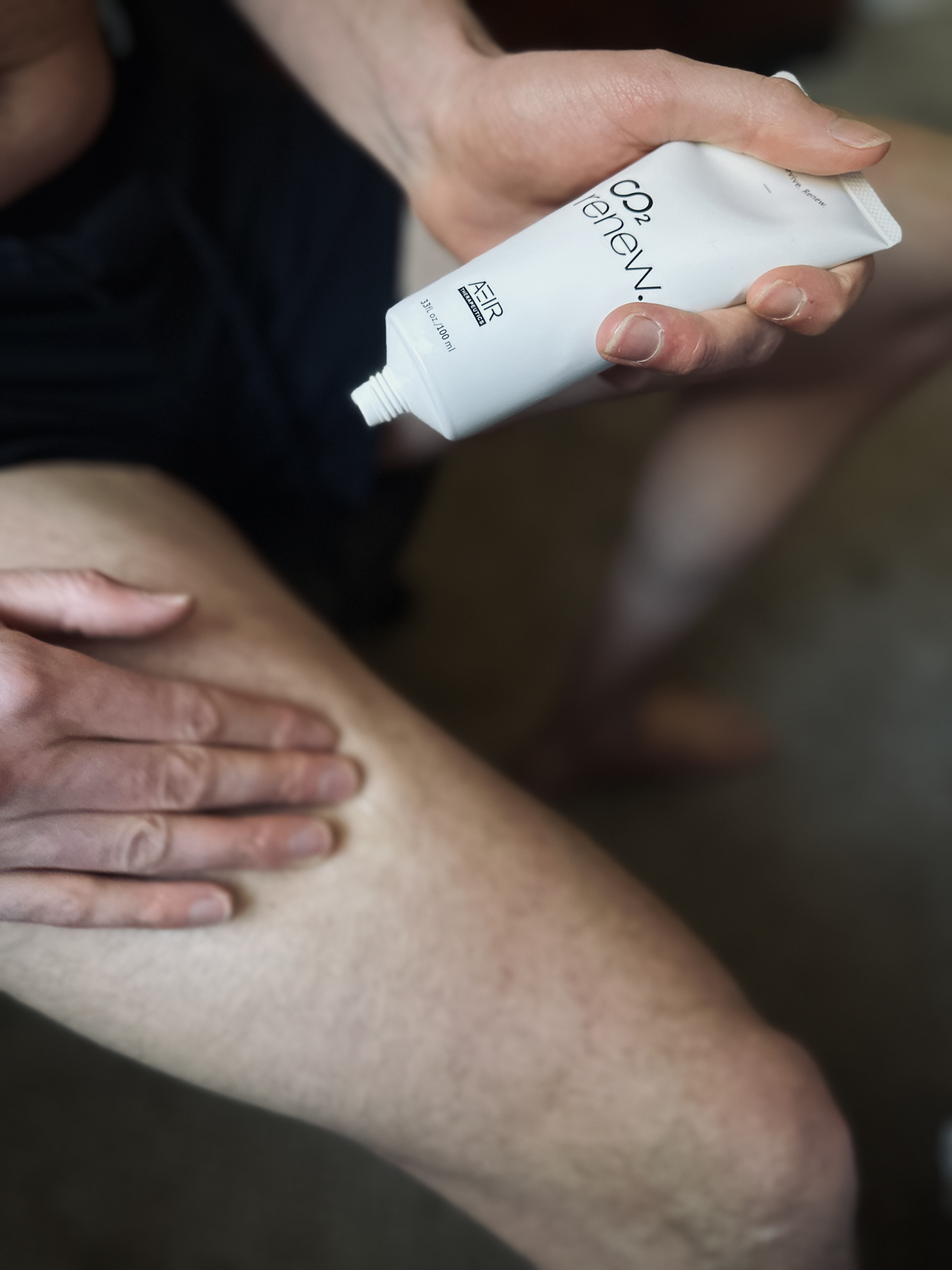
CO2 therapy triggers the Bohr Effect — dropping oxygen into shin, calf, Achilles, hip flexor, and IT band right where the last run left damage. The paste travels with the training block. The Flex Kit handles the volumes that break most recovery strategies.
Apply the paste to what reported today. Run tomorrow. Repeat for eighteen weeks and arrive at race day with tissue that's built up — not burned down.
30-Day Satisfaction Guarantee
Training-block tool
Paste. Every night.
A training block is a repetition problem.
The same tissue takes the same impact thousands of times a week.
Forty, sixty, ninety miles a week is not a cardio problem — your engine can handle it. It's a local-tissue problem. Shins pick up micro-trauma from the repetitive stride impact. The Achilles and calf complex carry eccentric load through every footstrike. The IT band inflames at volume. The plantar fascia fails silently until it doesn't. Hip flexors tighten from the same gait, every step, every run.
Most runners reach the same conclusion the hard way: the limit isn't VO2 max. It's whether a specific zone — this shin, this Achilles, this hip — can rebuild between runs.
CO2 therapy works on that exact physiology: local perfusion, tissue oxygenation, and the repair environment the Bohr Effect creates.
The science.
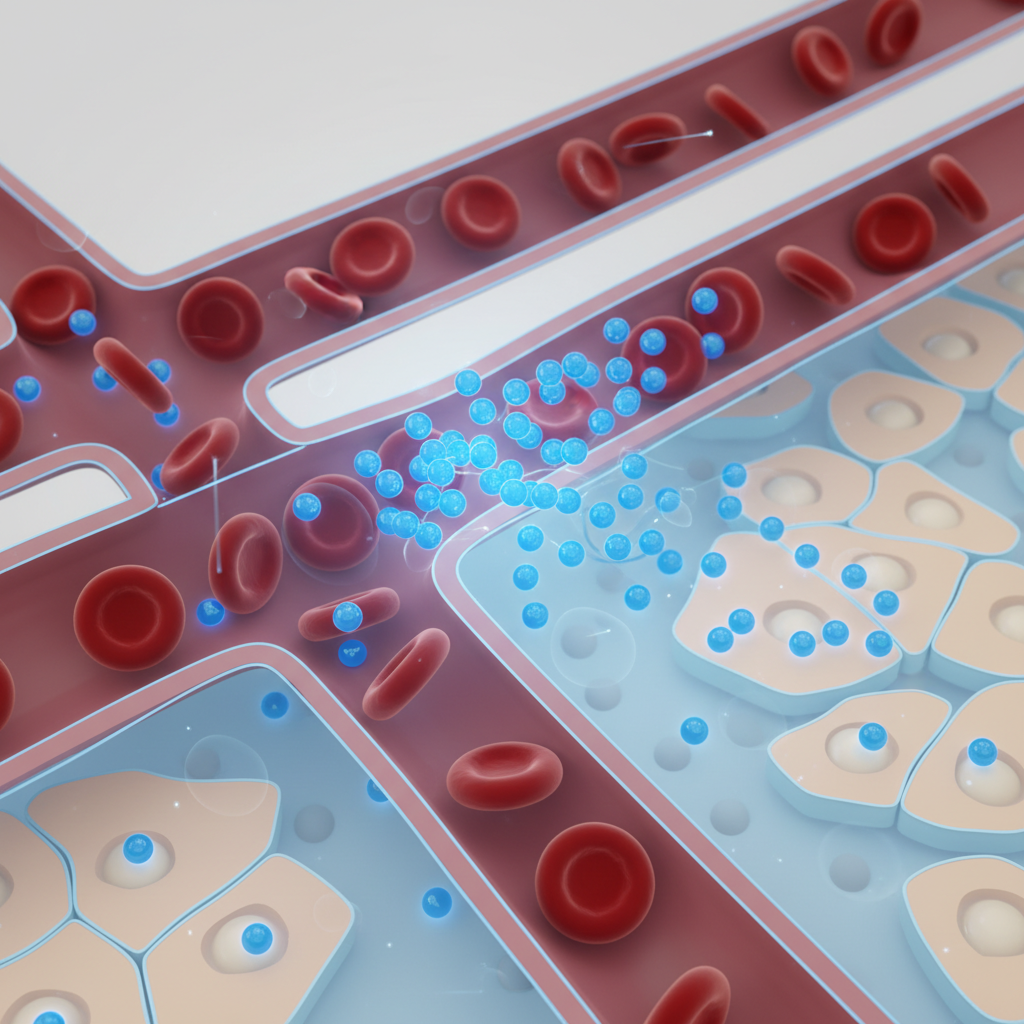
Your blood is already saturated. What determines healing is whether CO2 lets oxygen land.
The Bohr Effect is the mechanism your body uses every second of a run to send oxygen from blood to working muscle: concentrated CO2 triggers hemoglobin to release its oxygen into the tissue beneath it. After the run, damaged tissue still needs that delivery — but the metabolic signal is no longer there.
AEIR's transdermal CO2 therapy concentrates that signal externally. The paste is local — applied to the shin, the Achilles, the hip flexor. The Flex Kit is systemic — shoulders to toes, one 30-minute session. Same mechanism. Different dose. Same effect: your cells actually get the oxygen your blood has been carrying.
See how CO2 compares to hyperbaric →CO2 Renew Paste
The single most useful habit in the training block.
Apply to what reported. Cover for 20–30 minutes. Run tomorrow. $99 for five 10ml tubes; the 100ml subscription is the long-term answer.
Shin, calf, Achilles
The impact-load zone. Paste on shin splints the same night they report. Calf cramping after a track workout. Achilles stiffness the morning after a long run. Localized Bohr Effect where impact trauma lands.
IT band, hip flexor, glute med
The rotational and stabilizer zone. IT band after long runs. Hip flexor tight from speedwork. Glute med firing unevenly. Paste on the hot zone, under wrap, while you eat dinner. Same nightly ritual, different zone depending on the day.
Plantar fascia, arch, forefoot
The zone runners ignore until it's a problem. Paste applied to the arch or heel before bed, through a sock or lightly wrapped. Early intervention is the entire game. Plantar issues don't get better on their own — they get better when perfusion returns.
The AEIR Full-Body Flex Kit
For long-run and ultra volumes.
When the paste can't keep up with the training load, the suit does. $2,799 for the extra-large-zipper suit, filling kit, and hydrogel.
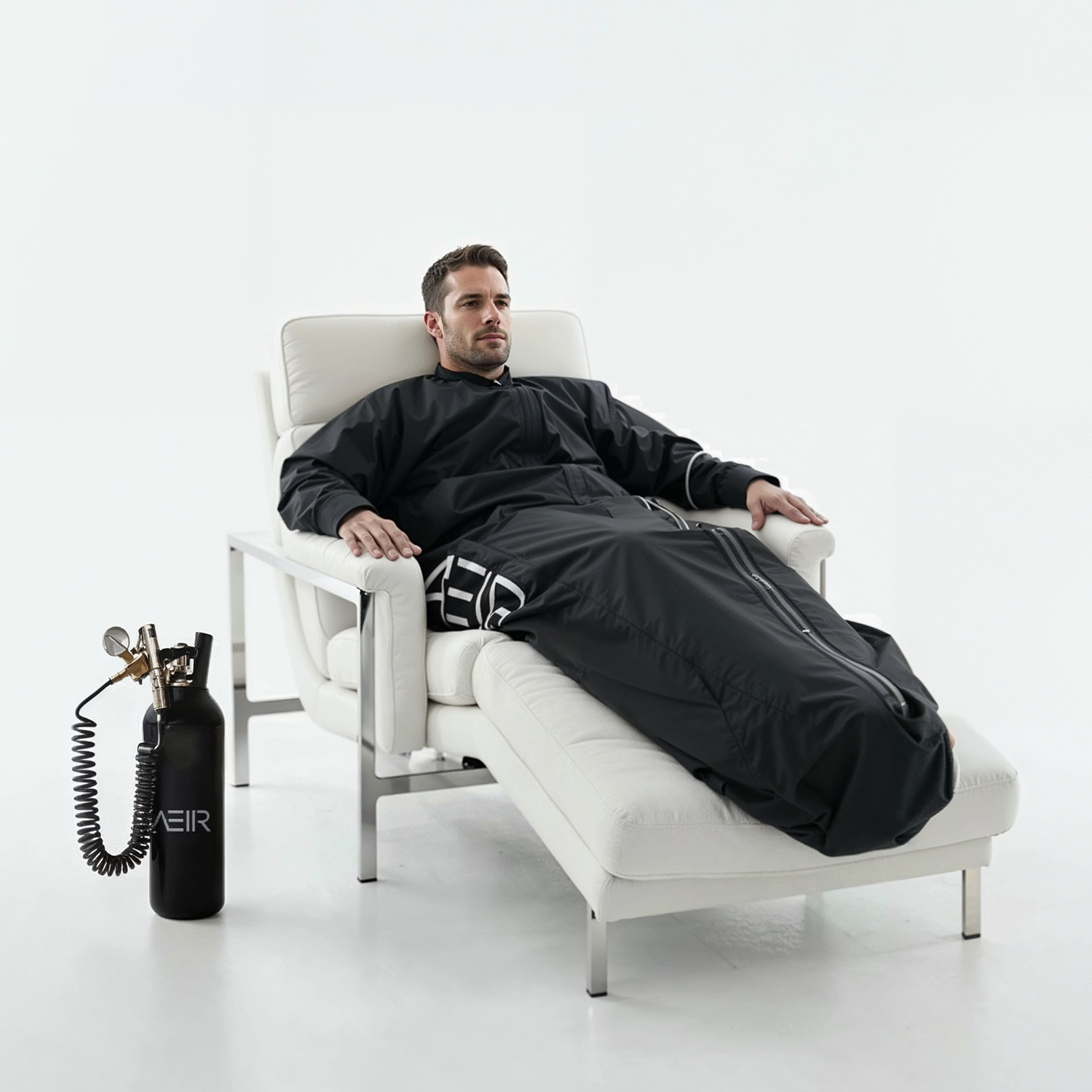
Systemic, every tissue bed
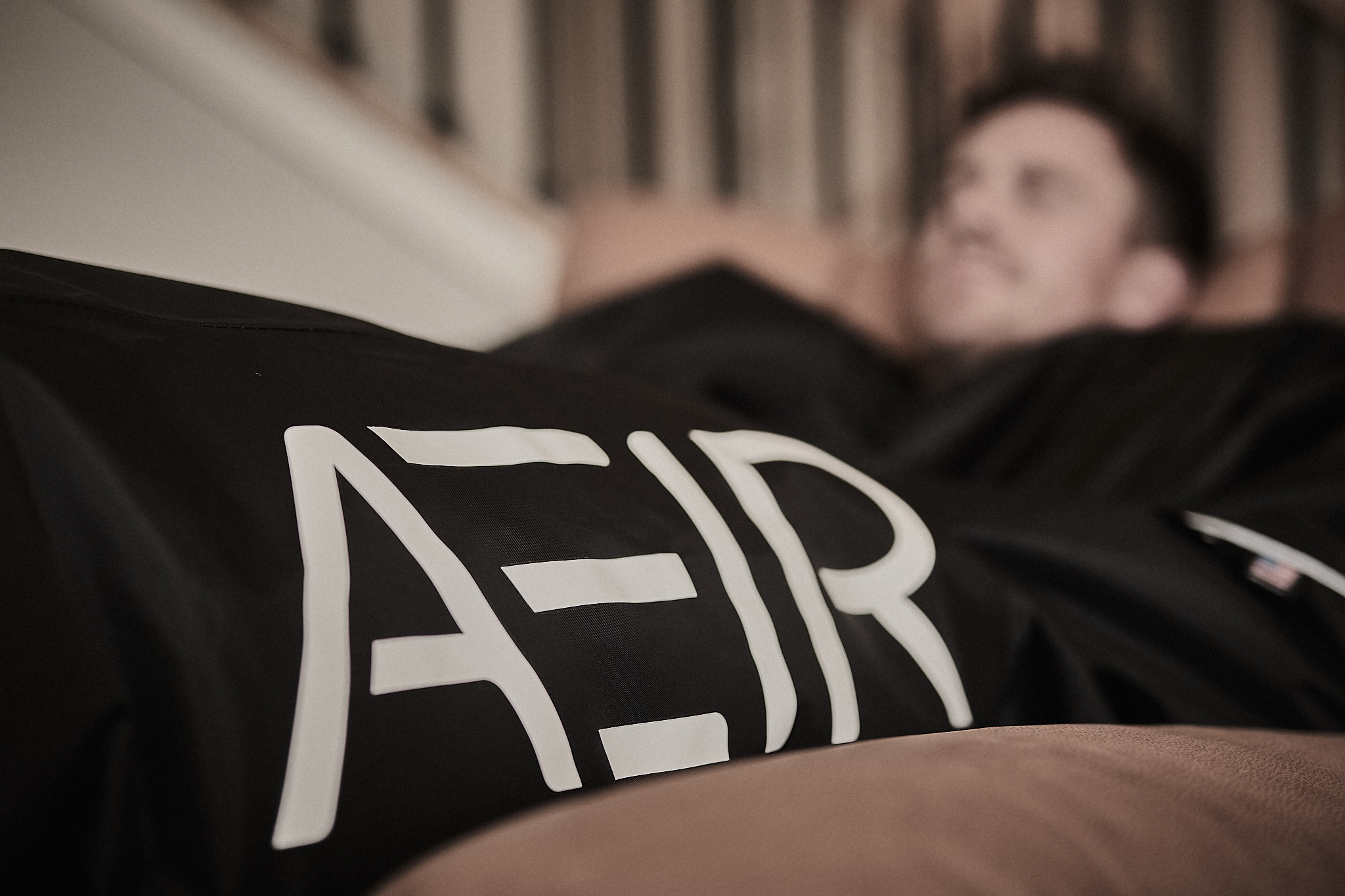
Long runs and ultras create systemic recovery debt, not a single hot zone. The suit surrounds shoulders to toes in a calibrated CO2 environment — every tissue bed getting vasodilation and Bohr-Effect-driven delivery at once.
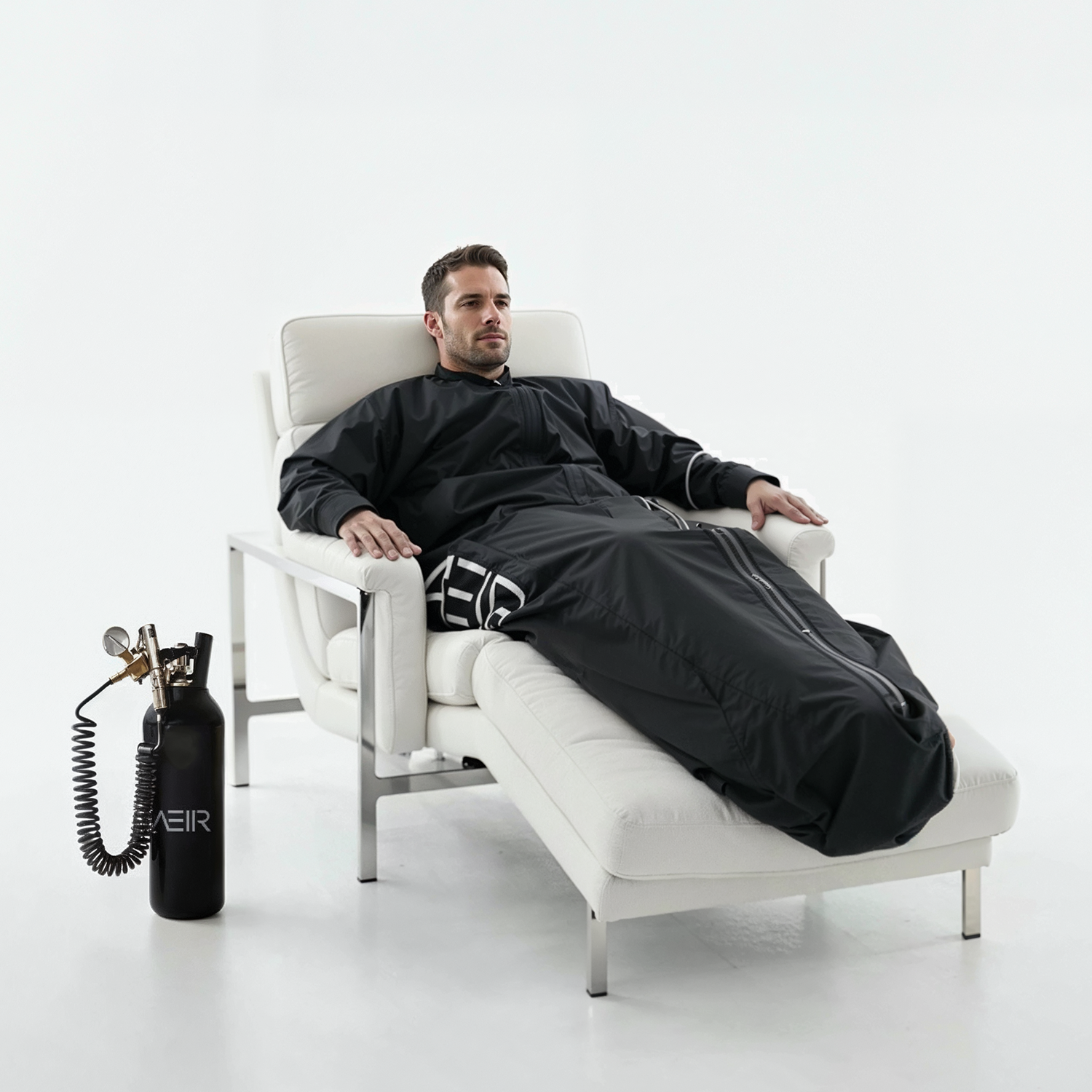
30-minute passive session
Post-long-run, zip in, vacuum, and sit still. No strain, no effort. Watch the race replay, text your coach, sit with your dog. Recovery as a seated ritual.
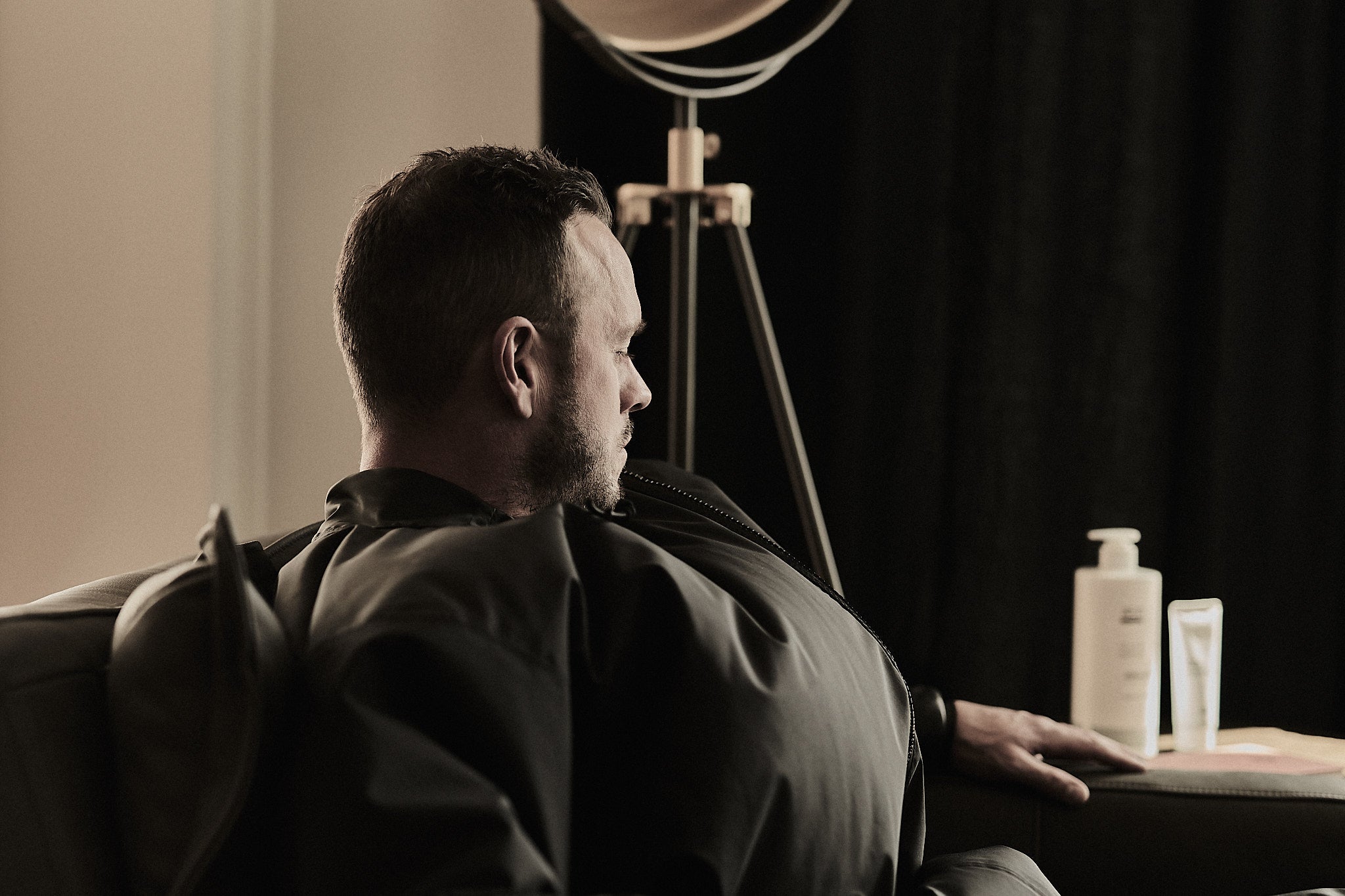
Peak week + race week
The highest-volume week of a training block is where most injuries bloom. Peak-week Flex Kit sessions (2–3×) and race-week sessions (1 taper-adjacent) carry runners through the hardest tissue loads into start-line freshness.
Paste as the daily companion. Suit as the anchor at volume.
The running recovery protocol.
Every phase of the block has a touchpoint.
Daily paste
Whatever reported that day
Shin, calf, Achilles, plantar. Nightly paste on the single loudest zone. Early base is when runners build the habit that saves peak week.
Weekly suit
One session, long-run day
Post long run. 30 minutes in the Flex Kit. Systemic reset before the next week begins.
Pre-habilitation
Known vulnerable zones
If last season ended with an Achilles flare or plantar issue — paste that zone preventively, twice a week, even when it's quiet.
Hydration
Non-negotiable
CO2 therapy rewards hydrated tissue. Water is the base layer under every recovery tool.
Workout nights
Paste on track/tempo zones
Speedwork lights up calves, hip flexors, and hamstrings. Paste that night, always. Build week has no room for residual tightness.
Long-run days
Suit within 24 hours
15+ miles? Suit within the window. Systemic flush before the mid-week workout arrives.
Sleep / recovery days
Easy-day paste
Easy days still produce tissue load. Paste on whatever residual zone is still reporting. Don't let easy-day damage reach Wednesday's workout.
First flare
Intervene immediately
A shin that just started reporting gets paste tonight, not next week. Runners who wait pay for it. Early intervention is the entire game.
Highest volume
Daily paste, multi-zone
Peak week. Multiple zones report. Use 2–3 tubes across one night if needed — one per zone, under wrap, 20–30 minutes each.
Suit 2–3× week
Systemic anchor
Long run day. Mid-week workout day. One optional easy-day reset. Carry systemic tissue through the biggest weeks of the block.
Travel / tune-up races
Paste on the road
Five 10ml tubes in the 5-Pack. Hotel application, wrap, 20–30 minutes. Suit waits for home.
Coach / PT loop
Communicate the zone
If a zone keeps reporting across multiple sessions, loop your coach or PT in. Paste supports tissue repair; it doesn't replace load management.
Taper prep
Suit Monday or Tuesday
Systemic reset at the top of the week. Let tissue finish repairing while the taper provides space.
Nightly paste
Last-mile maintenance
Any zone that's been managed all block gets paste every night of race week. No experiments. Keep the tissue ready.
Race morning
Paste is optional
Most runners skip race-morning paste to keep the warmup simple. If a specific chronic zone benefits from warmth, paste 90 minutes pre-start, remove 60 minutes out, warm up as usual.
Post-race plan
Suit within 24 hours
The fastest return to baseline from a marathon or ultra is systemic. One suit session in the 24 hours after the finish.
Chronic zones
Keep after it
Post-race window is when runners underinvest in recovery. Daily paste on any chronic zone for at least two weeks post-race.
Two suit sessions
Weekly rhythm
Two full-body sessions a week through recovery. Systemic tissue flushes carry forward into the next block.
Strength reintroduction
Paste on new zones
Off-season strength work lights up new zones. Paste those as they emerge — glutes, hamstrings, back.
Injury review
Where did you lose weeks?
Whatever injured you in the last block gets pre-habilitation paste starting now. Don't rebuild to the same limit.
Where AEIR meets the endurance world
Built alongside the athletes whose bodies decide what "enough recovery" actually means.
AEIR's recovery protocols are shaped by the endurance community — not just in theory, but in practice. Chad Hancock (AEIR) hosted triathletes at the 2026 Iron Man Texas event, where full-body suit sessions ran before and after race simulation days. The Precision Hydration team experienced the suit in that environment. These conversations — hydration, carb prep, recovery integration — are how we learn what the protocol actually needs at the highest volumes amateur and professional endurance athletes are running.
AEIR has no commercial endorsement relationship with Iron Man or any individual race. Event context only.
The Research
The research behind the protocol.
Peer-reviewed. Mechanism-first. Full PDFs in our research library.
Peer-reviewed
CO2 accelerates muscle injury repair
In controlled models, transcutaneous CO2 application accelerated muscle injury repair — measurable in tissue, not just sensation.
Transcutaneous carbon dioxide application accelerates muscle injury repair in rat models.
Peer-reviewed
CO2 improves endurance performance at the cellular level
Elevated CO2 improved endurance performance at the cellular level. The same mechanism that ends a run is the one that powers through it.
Increase in carbon dioxide accelerates the performance of endurance exercise in rats.
Peer-reviewed
Skeletal muscle function improves
Skeletal muscle function improved after transcutaneous CO2 exposure — the foundation of AEIR's recovery and performance protocols.
The effect of transcutaneous application of CO2 on skeletal muscle.
Peer-reviewed
Circulation measurably improves in one session
Thermal imaging confirms peripheral circulation improvement after a single dry CO2 session.
Sakai et al. — Dry Carbon Dioxide Bathing on Peripheral Blood Circulation.
Runner FAQ.
Two entry points. Same mechanism. Built for the training block.
Start where your mileage lets you.

Entry Point
CO2 Renew 5-Pack — $99
Five 10ml tubes. Shin, calf, Achilles, hip flexor, plantar fascia. The daily habit that carries a training block.
$99 under $20 per treatment
Shop the 5-Pack
Flagship Experience
AEIR Full-Body Flex Kit — $2,799
Thirty minutes, systemic, passive. The tool that handles the highest-volume weeks.
$2,799 complete system
Explore the Flex KitThe training-block letter.
Protocol notes, new research, and case observations from the AEIR clinical team. One message a week. No filler.
By subscribing, you agree to our privacy policy.
"Runners don't need a new recovery tool every month. They need one that works on tissue, every night, for the length of a block. The paste is that tool."