
Golf
Play the same game at 70 you played at 50.
CO2 therapy triggers the Bohr Effect — sending oxygen from your bloodstream directly into the tissue that holds the club, rotates the hips, and carries the low back. Consistency, not exertion. Longevity, not novelty.
The paste lives on the nightstand. The Flex Kit lives in the spare room. Together, they are the quiet foundation of a body that keeps showing up — one round, one season, one decade at a time.
30-Day Satisfaction Guarantee
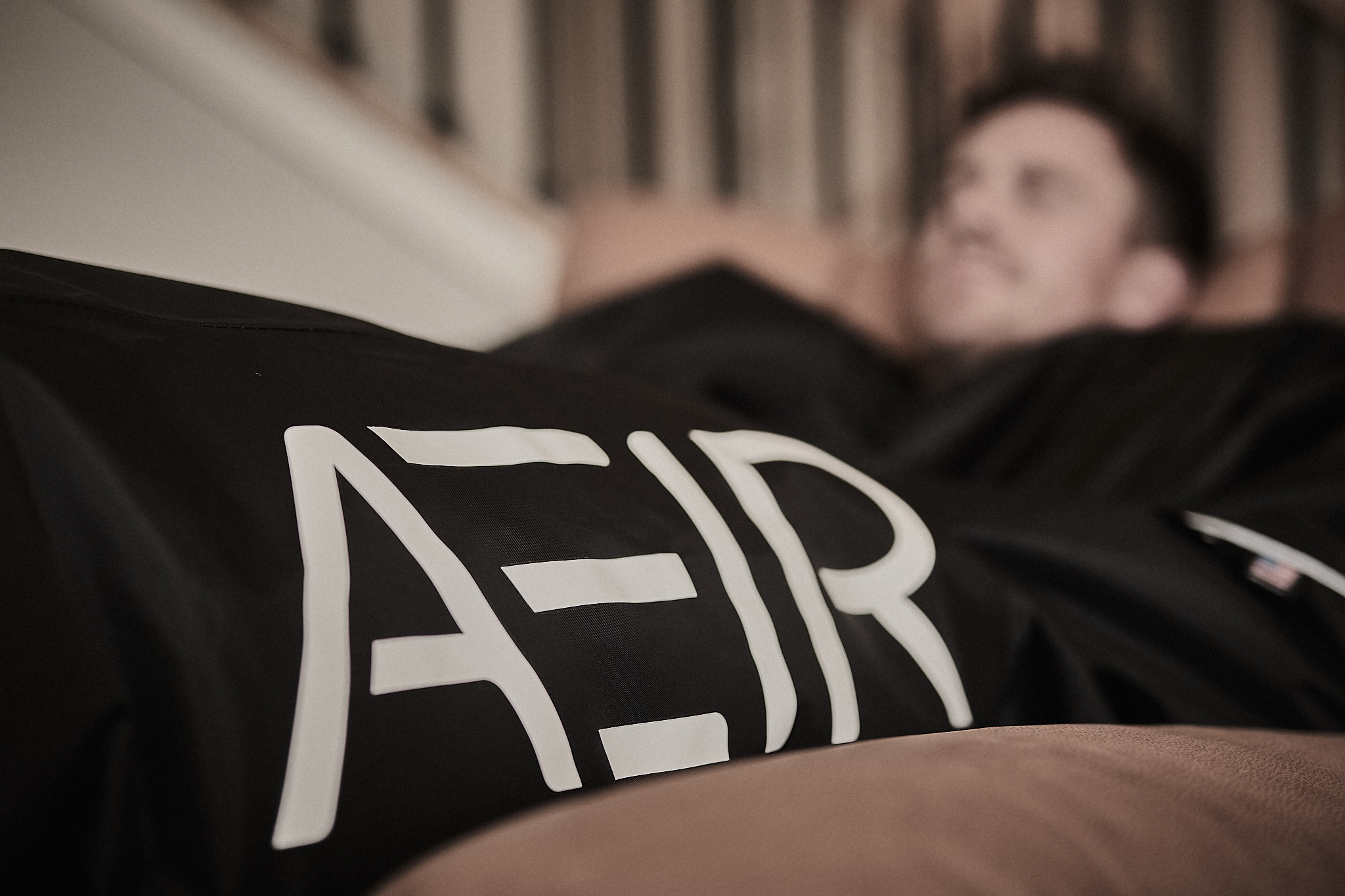
The long game
Longevity, not novelty
Golf is repetitive load disguised as a gentle sport.
Your swing asks the same joints for the same thing, thousands of times a year.
A bucket at the range is four hundred repetitions through the same rotation, the same grip, the same lead-side hip. Add four or five rounds a month, add a tournament week, add a decade of it, and the parts of the body carrying that load — lead-side wrist and forearm, trail-side low back, both shoulders — don't get a real off-season.
For most golfers, the decline isn't dramatic. It's a lost yard. A tight morning. A grip that clicks where it used to glide. Early arthritis in the thumb. A shoulder that limits the top of the backswing by inches.
CO2 therapy works on exactly the physiology that determines whether those tissues repair overnight or accumulate into something permanent: microvascular function, tissue oxygenation, and the body's own healing signal — the Bohr Effect.
The science.
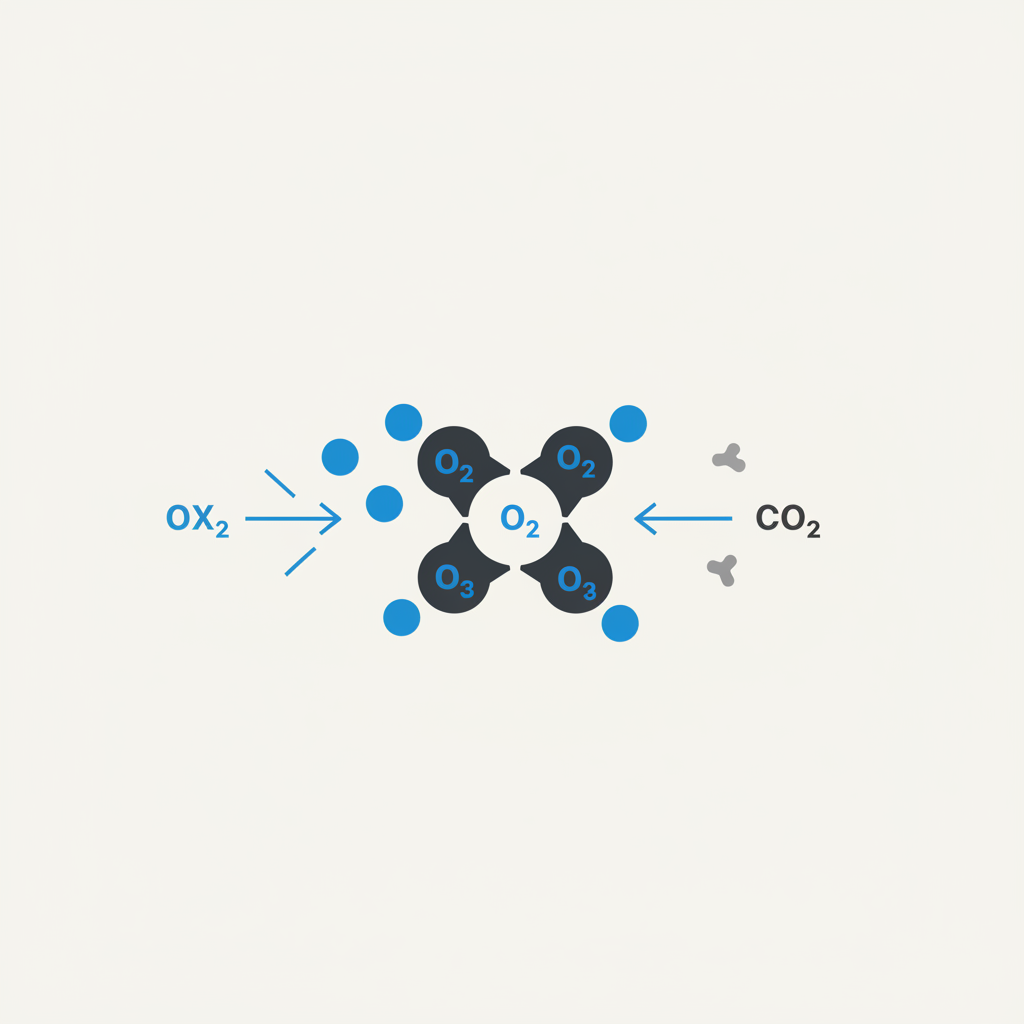
Your blood is already saturated with oxygen. The question is whether it reaches the tissue that needs it.
Oxygen alone doesn't repair tissue. The Bohr Effect — the physiological mechanism where concentrated CO2 causes hemoglobin to release oxygen into the tissue beneath it — is how oxygen actually lands.
AEIR's transdermal CO2 therapy concentrates that signal locally (paste on the wrist or shoulder) or systemically (the Flex Kit for full-body). No appointments, no pain, no downtime. Just a body that recovers between rounds.
See how CO2 compares to hyperbaric →CO2 Renew Paste
The daily ritual.
The parts of the body that carry your swing — addressed nightly, with compounding benefit. $99 for five 10ml tubes; a subscription on the full-size 100ml is the long-term answer.
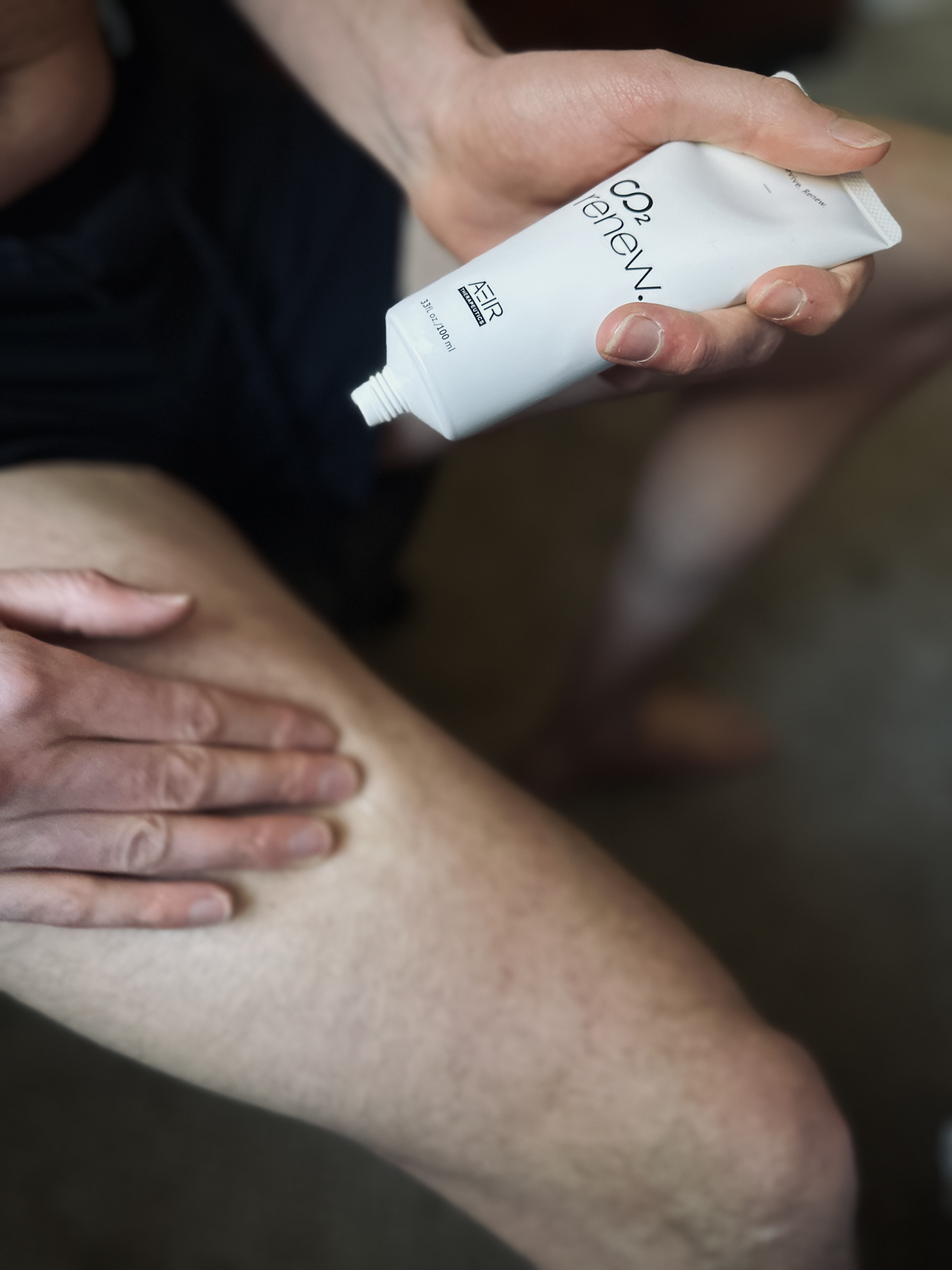
Hand, wrist, forearm
The grip-side tissue that absorbs a lifetime of impact. Paste applied to the wrist and forearm after a round — under plastic wrap, 20–30 minutes, while you make dinner. The zone that reports loudest is the zone that benefits first.
Shoulder and thoracic
Top-of-backswing range that's gotten shorter. Shoulder stiffness the next morning. Paste applied to the rotator and upper back — same ritual, different zone. Range returns as tissue perfusion returns.
Low back + hips
The rotational load of a golf swing lands squarely on the trail-side low back and hip. Paste, nightly, on the hot zone. For most golfers, this is where consistency between Saturday and Sunday begins.
The AEIR Full-Body Flex Kit
The weekly reset.
30 minutes. Systemic. Passive. $2,799 for the extra-large-zipper suit, filling kit, and hydrogel.
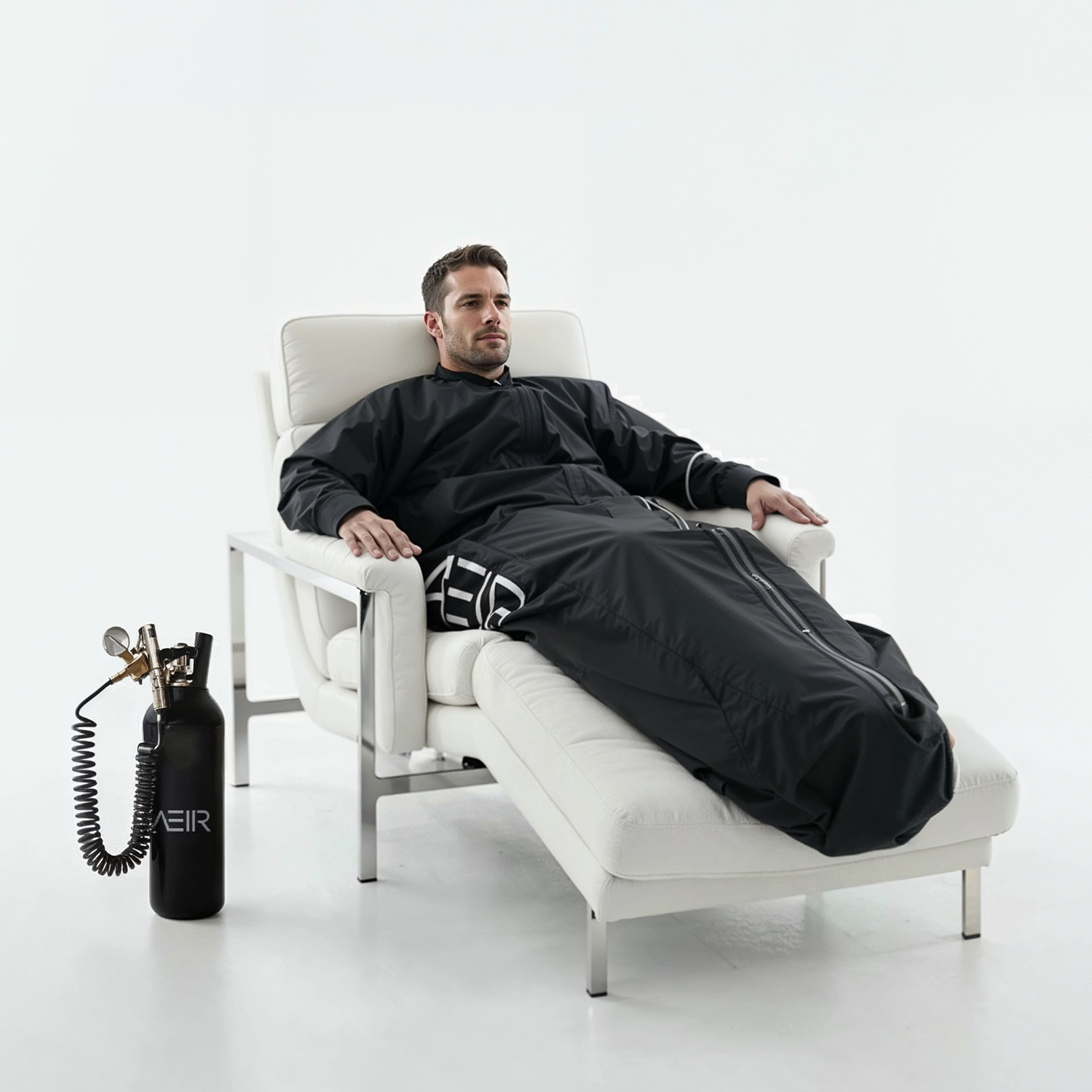
Shoulders to toes
The suit surrounds the entire body in a calibrated CO2 environment. Every joint, every muscle group, every tissue bed gets exposure — vasodilation, Bohr-Effect-driven oxygen delivery, head to foot.
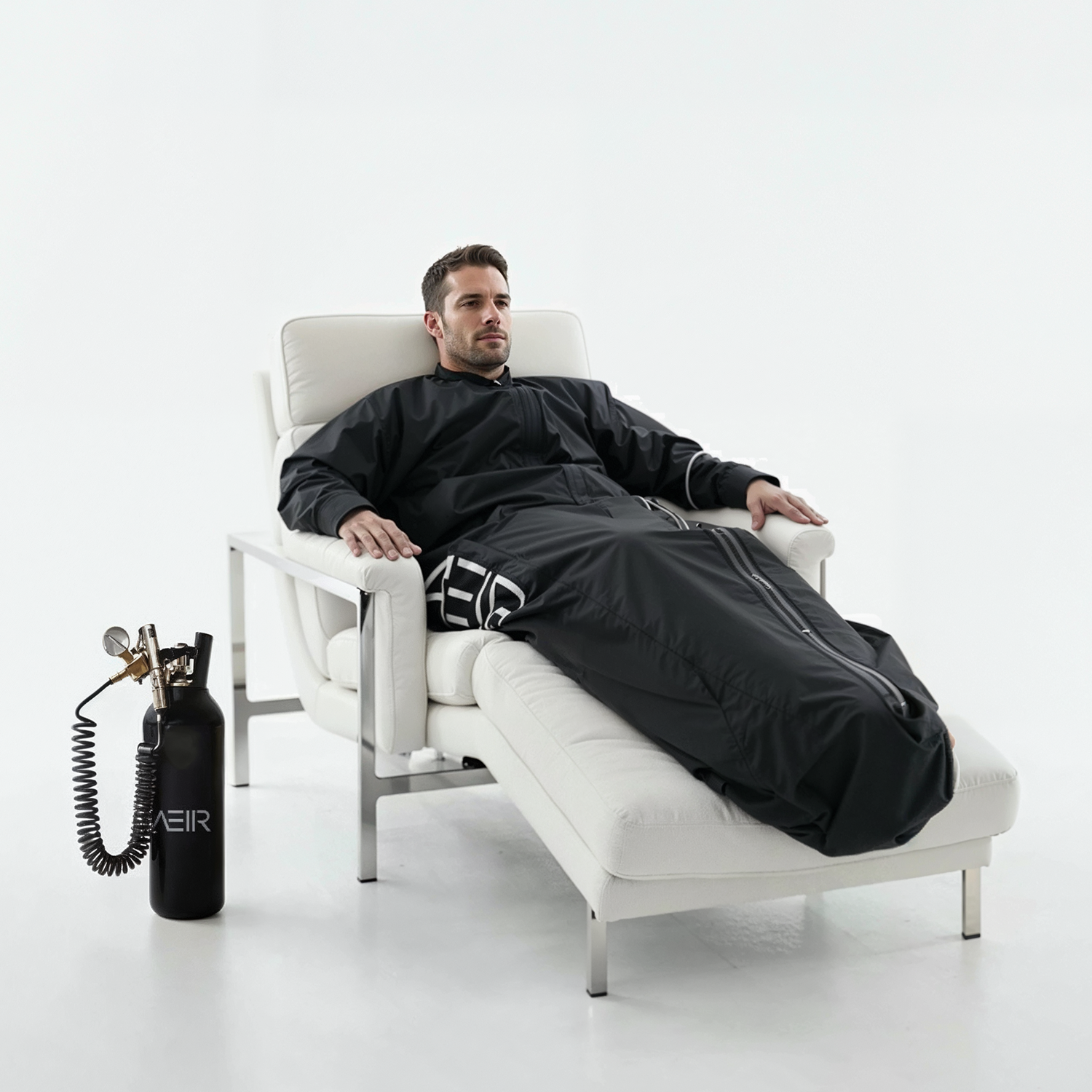
The calm, the book, the recovery
Zip in. Vacuum. Read the book, watch the round, sit quietly. 30 minutes. No strain, no effort. Professional-grade recovery at rest.
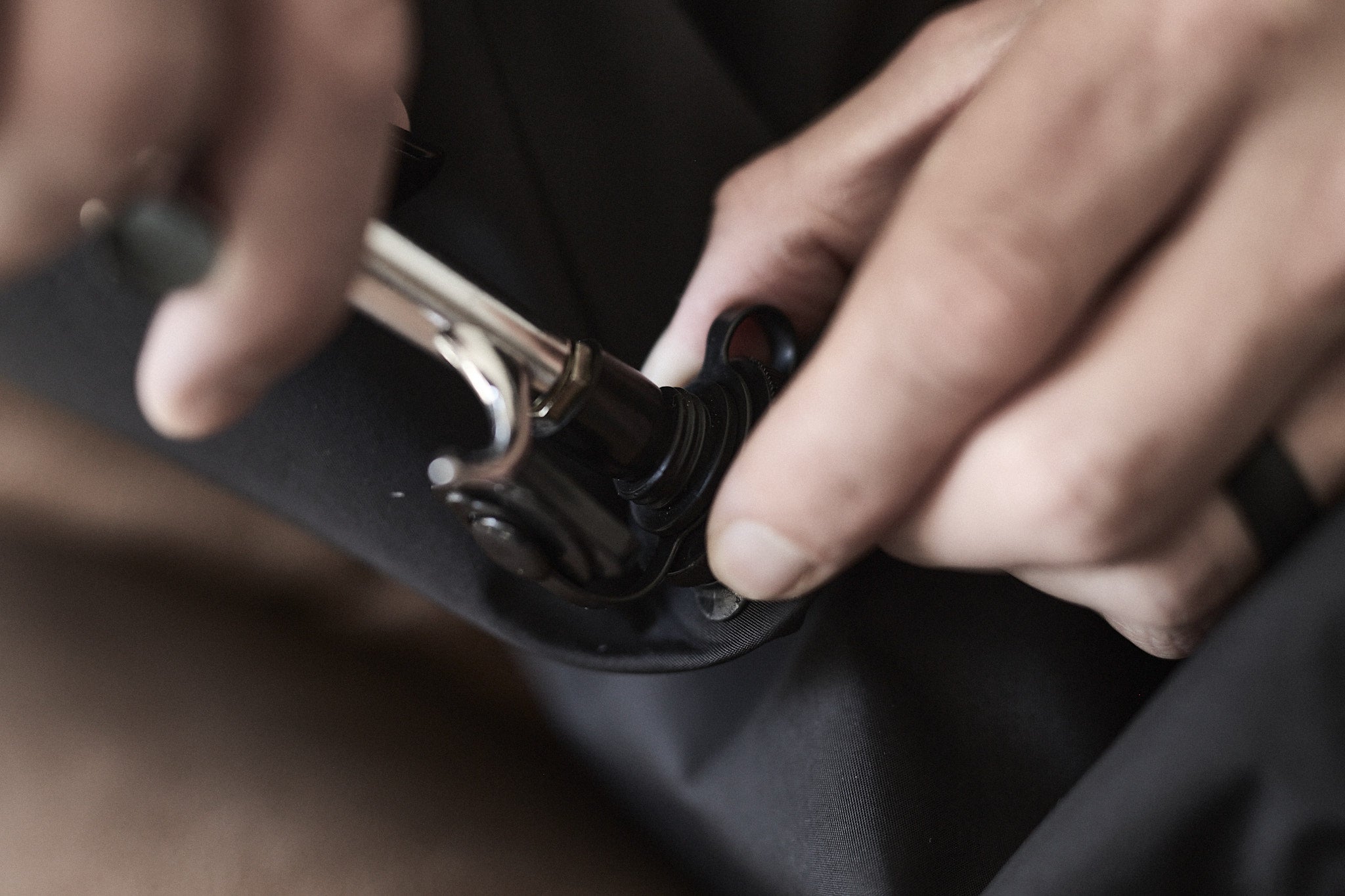
Post-round. Post-tournament. Pre-trip.
Sunday evening after 36 holes. Tournament Wednesday before the long weekend. Morning before a three-day golf trip. One suit session is what a typical golfer needs to feel like himself again.
The anchor story.
He'd stopped swinging the club. Ten days later, he was back on the tee.
Brian is 70. Arthritis in both wrists. He'd been a lifetime golfer, but the pain had pushed him out of the sport — not dramatically, but a round at a time. The grip hurt. The follow-through locked up. The morning after a round was worse than the round itself.
He started with the CO2 arm sleeve for systemic forearm and wrist coverage, paired with CO2 Renew paste on the most painful zones nightly. The mechanism isn't cosmetic: transcutaneous CO2 improves microvascular function in tissue that's lost the ability to deliver oxygen efficiently — exactly the population arthritis describes.
Ten days in, he swung the club comfortably — without painkillers — for the first time in years. That's the quiet story AEIR cares about: not a viral moment, but a man getting his sport back because the physiology finally had the right signal.
Explore the Arm Sleeve →"Ten days with the sleeve and the paste, and I was back on the tee. I didn't need to take anything for it. The wrist did the work once the oxygen actually got there."
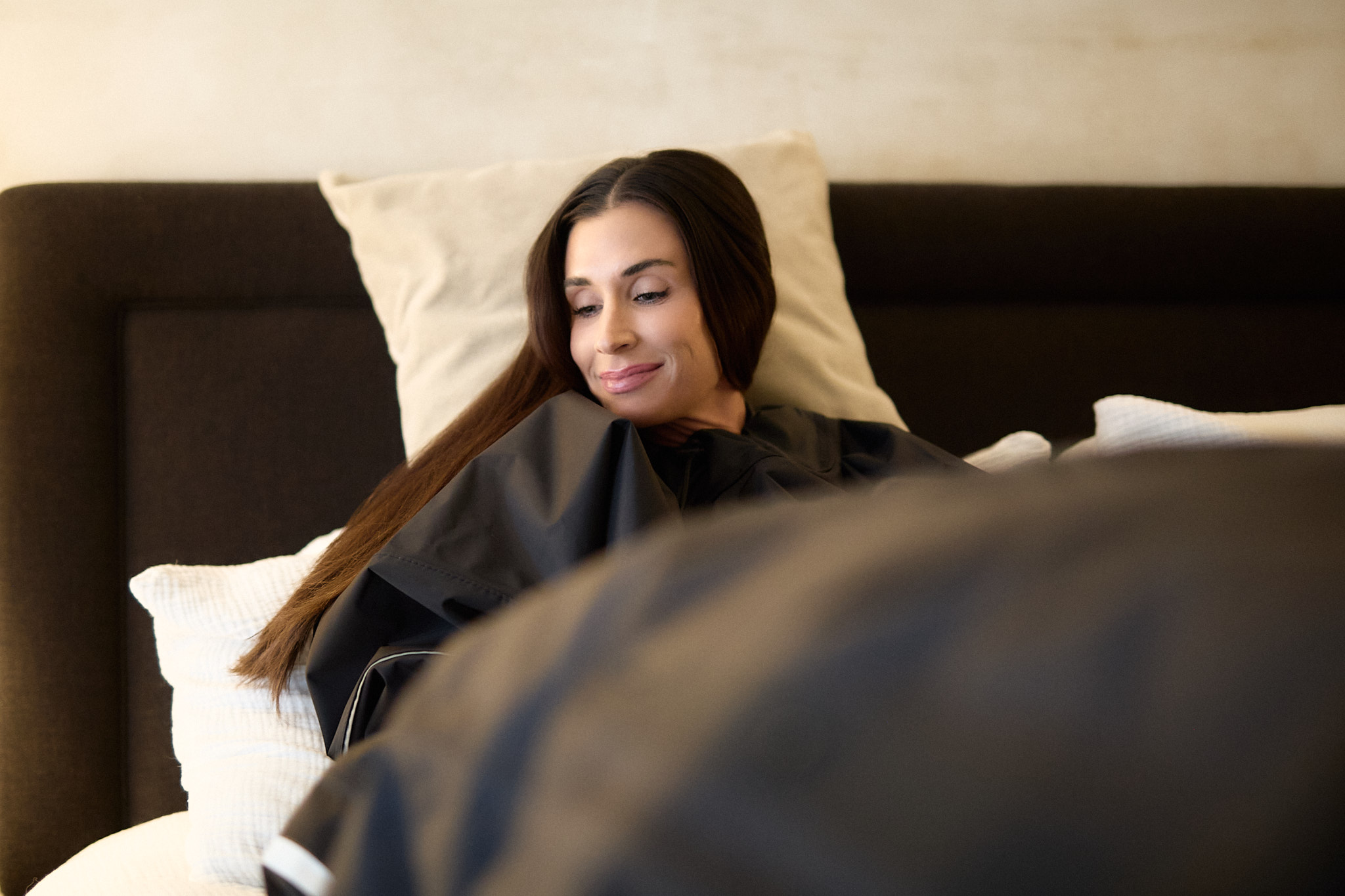
Paste as daily ritual. Suit as weekly reset.
The golf recovery protocol.
Every phase of play has a touchpoint.
Pre-range
Paste, 60 minutes before
Wrist and forearm on the lead side. Shoulder on the trail side. Tissue warm and vasodilated before the first swing.
Mid-session
Listen
If the grip reports early, end the session five swings earlier. Paste that night before bed — compound, don't push through.
Post-range
Paste on the loudest zone
20–30 minutes under plastic wrap after dinner. Low-friction ritual; the compounding benefit is the point.
Next morning
Baseline check
If the wrist or shoulder is still reporting, pair with a suit session within 48 hours. Don't let a range day become a rest week.
Monday / Tuesday
Suit session
Systemic reset at the start of the week. Tissue enters practice rounds at baseline — not halfway through the week already behind.
Practice round night
Paste, multi-zone
Wrist, shoulder, low back. Three zones in one evening is realistic — each tube handles one area.
Tournament round AM
Paste on known tight spots
60–90 minutes before tee time. Under wrap 20–30 minutes. Warmup as usual.
Sunday night / Monday
Suit for full reset
After 72+ tournament holes, the systemic recovery session is non-negotiable. Back to baseline within 24 hours.
Evening of
Paste on the loudest zone
Single best-ROI habit for recovery. Shower, dinner, paste under wrap for 20–30 minutes. Low back, shoulder, or forearm, depending on what reported.
24-hour window
Suit if 18+ holes
After 18 holes walking, 36 holes riding, or a long double-round day — add a suit session within 24 hours. Systemic flush before the next round.
Known chronic zone
Keep after it
The zone you've dealt with for years — arthritic thumb, capsule-stiff shoulder, surgical knee — gets paste even on non-round nights. Cumulative benefit is the whole game.
Hydration
CO2 therapy rewards hydration
Tissue perfusion begins with fluid. Water intake is non-negotiable.
Mobility rebuild
Paste + PT
Pair CO2 Renew with your mobility or PT work. Target the zones that limited your backswing or follow-through last season.
Chronic joint care
Arthritis-prone joints
Hands, knees, ankles, thumbs. Daily paste. The off-season is when cumulative benefit compounds invisibly.
Weekly suit
One session a week
Systemic support through the winter. Enter spring with tissue ready to swing.
Pre-season ramp
Two weeks before play
Shift paste from rehab to pre-habilitation. Warm the tissue you're about to ask most of.
The Research
The research behind the protocol.
Peer-reviewed. Mechanism-first. Full PDFs in our research library.
Peer-reviewed
CO2 improves peripheral circulation
Thermal imaging confirms measurable peripheral circulation improvement after a single dry CO2 session.
Sakai et al. — Dry Carbon Dioxide Bathing on Peripheral Blood Circulation.
Peer-reviewed
CO2 improves microvascular function in compromised tissue
Transcutaneous CO2 improved microvascular function in patients whose tissue oxygen delivery was already failing — the hardest population to help.
Transcutaneous gaseous CO2 for microvascular function.
Peer-reviewed
Skeletal muscle function improves
Skeletal muscle function improved after transcutaneous CO2 exposure — the foundation of recovery and performance claims.
The effect of transcutaneous application of CO2 on skeletal muscle.
Peer-reviewed
CO2 therapy moves the body toward homeostasis
Therapeutic CO2 pushes the body toward homeostasis — the opposite of the stress response most recovery tools trigger.
How Therapeutic Carbon Dioxide Moves the Response toward Homeostasis.
Golfer FAQ.
Two entry points. Same mechanism. Both built for the long game.
Start where your schedule lets you.

Entry Point
CO2 Renew 5-Pack — $99
Five 10ml tubes. Wrist, shoulder, low back, hand. The daily ritual that compounds across a season.
$99 under $20 per treatment
Shop the 5-Pack
Flagship Experience
AEIR Full-Body Flex Kit — $2,799
The weekly systemic reset. Thirty minutes, shoulders-to-toes recovery, no equipment to plug in.
$2,799 complete system
Explore the Flex KitThe long-game letter.
Protocol notes, new research, and occasional member stories from AEIR. One message a week. No filler.
By subscribing, you agree to our privacy policy.
"The best recovery tool is the one you'll actually use every night for a decade. The paste is that tool for most of the people I treat."